2 Official Routes for Pakistani Passport Renewal Online in 2026
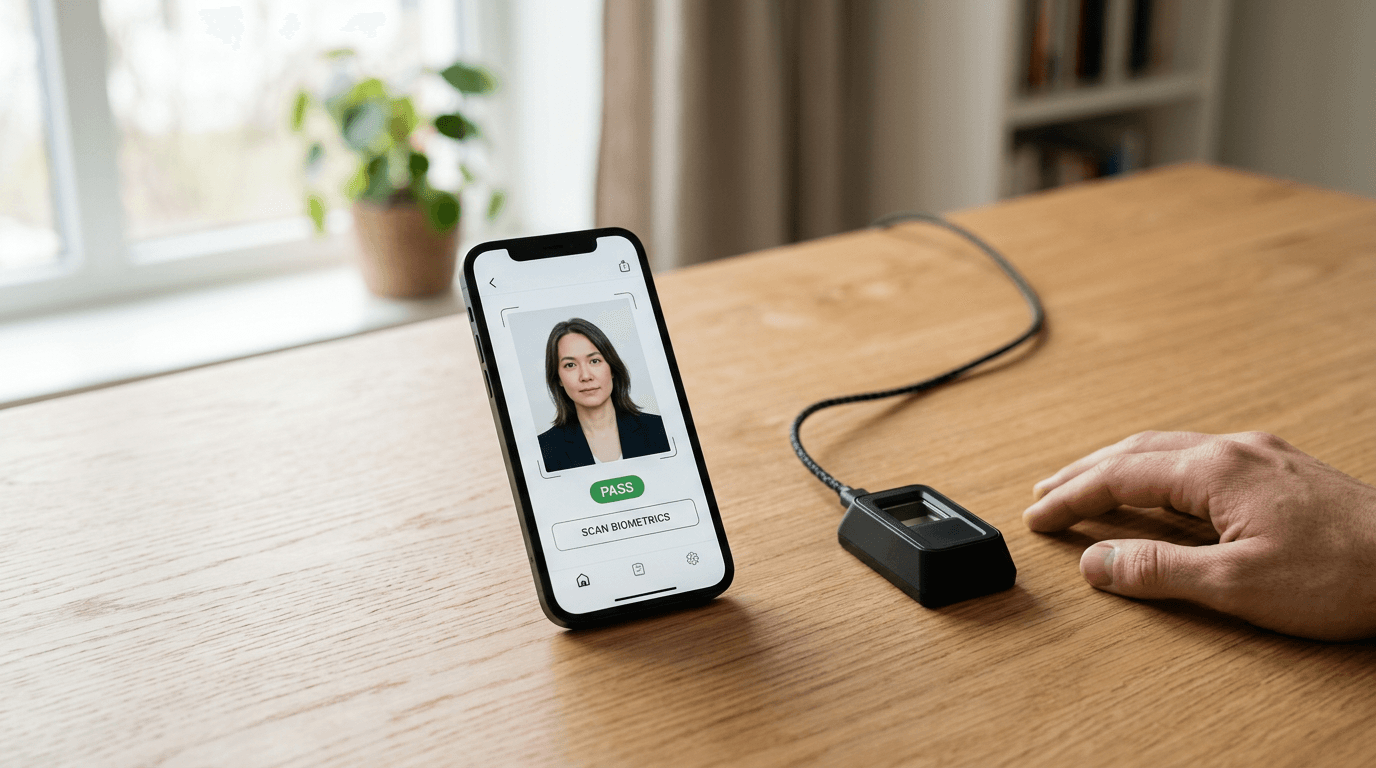
The moment an expatriate realizes their travel document expires in under a month, the immediate concern shifts to securing a consulate appointment. Yet, physical embassy visits for routine renewals are increasingly being phased out. Managing a pakistani passport renewal online removes the geographic friction of traveling to an embassy across multiple borders, replacing a day-long administrative chore with a digital workflow that demands specific technical inputs. A successful pakistan online passport renewal hinges entirely on providing flawless biometric data and perfectly formatted digital photographs from a living room. When the physical processing desk is eliminated, the burden of quality control falls heavily on the applicant. Supplying an image with a poorly lit background or submitting a compressed fingerprint scan results in immediate system rejection, halting travel plans without any human intervention. Understanding how to navigate the governmental digital infrastructure separates a 48-hour approval from a multi-week delay.
Quick Summary
Processing identity documents from abroad requires navigating interconnected government databases to submit biometrics and payment securely. Rather than visiting an embassy, applicants utilize dedicated governmental infrastructure to upload their machine-readable data and finalize renewals remotely.
- Physical consulates no longer dictate the timeline for standard document updates.
- Flawless image uploads prevent automated rejection by immigration servers.
- Distinct tools govern the application and biometric capture phases.
- Integrating these systems correctly reduces processing delays significantly.
Table of Contents
- Quick Summary
- How Document Workflows Dictate Your Choice
- Why Precision Matters More Than Speed
- The Complexity of Infant Renewals
- Preparing Your Digital Infrastructure
- 1. e-Services Portal (Directorate General of Immigration & Passports)
- 2. PakID Mobile App
- Matching Your Expatriate Situation To The Right Tool
- Recommended Reads
How Document Workflows Dictate Your Choice
| Product | Workflow Role | Features | Pros | Cons | Target Audience |
|---|---|---|---|---|---|
| e-Services Portal (Directorate General of Immigration & Passports) | End-to-End Renewal Platform | Web-based data entry, payment gateway, document upload | Consolidates application phases, directly links to national registry, handles fee collection | Sensitive to connection timeouts, requires precise PDF formats, strict file size limits | Expatriates needing standard renewals |
| PakID Mobile App | Biometric Collection Utility | Native camera access, fingerprint scanning, direct database sync | Eliminates physical ink forms, utilizes existing smartphone hardware, encrypts biometric payloads | Requires prior web registration, demands bright ambient lighting, cannot process payments | Applicants finalizing identity checks |
Navigating government infrastructure requires understanding exactly what stage of the application you are executing. The classification lens for these systems is their Workflow Role. We categorize the available infrastructure into an End-to-End Renewal Platform and a Biometric Collection Utility. An End-to-End Renewal Platform handles the heavy administrative lifting: establishing your identity, accepting credit card payments, and organizing your historical data into a coherent file. A Biometric Collection Utility serves a singular, specialized purpose: capturing the physical characteristics required to authenticate that file. You cannot bypass the platform in favor of the utility, nor can the platform finalize the process without the utility's biometric input. They operate as a mandatory sequence.
Why Precision Matters More Than Speed
Automated digital registries do not employ human reviewers to check your initial submission. When you upload a scanned document or a photograph, an algorithm evaluates the file for contrast, resolution, and dimensional accuracy. If a supporting document is heavily compressed, the optical character recognition software fails to read the existing booklet number. The server rejects compressed scans immediately. This prevents administrative delays, but it frustrates applicants who assume a blurry photo is sufficient for an initial review.
Similarly, providing biometric data via a smartphone introduces new failure modes. The software must detect the exact ridges of a fingerprint without physical ink. Shadows cast by a hand over a smartphone camera mimic ridge lines, resulting in a distorted biometric template. To bypass these issues, the applicant must strictly adhere to the technical parameters dictated by the system, ensuring files meet the 300 DPI resolution minimum and remain under the stipulated megabyte caps.
The Complexity of Infant Renewals
Managing travel documents for young dependents introduces severe formatting constraints. Automated platforms enforce strict chin-to-crown measurement ratios to ensure uniformity across international borders. Achieving this geometry with a newborn who lacks neck control is notoriously difficult. Expatriates managing infants should consult the United States Baby Passport Photo Guide to understand how automated validation tools reject improper head sizing.

Background removal represents another significant hurdle. A photograph taken on a bedsheet or an uneven wall introduces shadows that the parsing algorithm flags as non-compliant. Reviewing the United Kingdom Baby Passport Photo Guide clarifies the contrast requirements for official travel documents. The system demands stark separation between the subject and the background. For broader regional standards governing physical document attributes, the EU & International Baby Passport Photo Requirements & Guides breaks down exact millimeter tolerances expected by optical scanners.
Preparing Your Digital Infrastructure
Before initiating the workflow, the technical environment must be secured. Government application programming interfaces routinely drop connections if a data payload takes too long to transmit across international servers.
Practical rule: Always compress your supporting PDF documents to under 1MB using a grayscale filter before uploading; color scans frequently trigger gateway timeout errors during transmission over international networks.
Furthermore, the payment gateways attached to these portals are highly sensitive to cross-border fraud flags. Attempting to clear the processing fee using a corporate credit card from behind a virtual private network often results in a silent transaction failure. Applicants must prepare a stable, unmasked residential internet connection and ensure their identity documents are digitized perfectly before opening the browser.
1. e-Services Portal (Directorate General of Immigration & Passports)
The primary trigger that sends overseas citizens looking for this portal is the sudden realization that their existing booklet expires before an upcoming visa renewal. As an End-to-End Renewal Platform, it centralizes the payment, demographic data entry, and PDF document handling into one secure browser session. The official Government of Pakistan online platform connects securely to the central immigration registry, pulling existing historical data to generate a unique tracking identifier. Users upload a recent digital photograph, provide scanned copies of their current booklet, and clear the processing fee through a government-approved credit card gateway. We would pause before initiating this transfer on a restricted corporate network, as strict firewalls often interrupt the payment gateway handshake. When attaching the photograph, referencing the Germany Baby Passport Photo Guide helps ensure the file maintains the correct resolution before compression occurs.
Complete Data Ingestion Demands High Bandwidth
Because this platform manages the entire application lifecycle, it strictly depends on previously established identity records. Users should check this alignment. Current machine-readable passport data must match their National Identity Card exactly. The system cannot reconcile demographic discrepancies automatically. If the names or birth dates misalign across the central registry databases, the portal halts the application and mandates a physical intervention to correct the discrepancy. The interface handles standard renewals seamlessly. It stops functioning when presented with conflicting legacy data.
Deploy this centralized portal when holding a fully digitized identity card and facing an expiration date within the next six months.
Pros
- Centralizes all demographic updates into a single interface
- Generates the mandatory tracking identifier instantly
- Connects directly to the central national registry
Cons
- Drops connections frequently on unstable international networks
- Mandates strict file size caps for supporting documents
- Rejects transactions from masked or corporate IP addresses
2. PakID Mobile App
Mailing physical fingerprint cards used to halt the document processing timeline for weeks, creating a severe bottleneck for those separated from their home country by an ocean. Functioning as a Biometric Collection Utility, this official mobile application developed by NADRA allows Pakistani citizens to process identity documents and complete passport fingerprint verification without a scanner or ink pad. By linking directly to an active tracking ID generated on the web, the app leverages the smartphone's native camera hardware. The software uses high-contrast edge detection to map the friction ridges of the fingers, converting the visual image into an encrypted biometric template. We would hold off on utilizing this tool until the primary web portal explicitly generates a biometric tracking identifier. For families capturing data for dependents, consulting the New Zealand Baby Passport Photo Guide highlights how to position a subject to eliminate the background shadows that confuse automated scanning tools.
Native Camera Integration Replaces Ink Forms
Since it operates strictly as a peripheral data client, its operational limit is that it cannot alter the application type, correct demographic errors, or process payments; applicants must ensure their base application is flawless on the primary web portal before authenticating their physical identity here. If the tracking number input into the application links to an unpaid or incomplete web file, the biometric sync will fail without providing a specific error code. It is a one-way transmission channel designed exclusively to clear the final physical verification hurdle.
Practical rule: Never attempt biometric capture under artificial directional light; flat, diffuse daylight prevents the smartphone camera from misinterpreting shadows as ridge lines on a fingerprint.
Switch to this dedicated peripheral only after the main application fees are cleared and the system requests fingerprint verification.
Pros
- Removes the need to mail physical ink cards
- Encrypts biometric payloads during transmission
- Uses existing smartphone optical hardware
Cons
- Cannot process payments or demographic changes
- Fails to capture ridges in poor ambient lighting
- Requires a pre-existing web application ID
Matching Your Expatriate Situation To The Right Tool
If you are initiating the process from scratch and need to submit payments, establish your demographic data, and upload your existing booklet scans, you must utilize an End-to-End Renewal Platform. This route is mandatory for generating the tracking ID and clearing the financial requirements. You cannot begin the process anywhere else, as the central databases require a financial and demographic foundation before accepting physical evidence. Applicants managing straightforward updates for older children or adults will spend the vast majority of their administrative time in this web-based environment, organizing PDFs and confirming historical addresses.
Once the administrative foundation is laid and the system demands physical verification, transitioning to a Biometric Collection Utility becomes necessary. This is the only practical method for completing the fingerprint requirements without scheduling a physical consulate visit or mailing ink cards across borders. It requires a temporary shift from a desktop computer to a mobile device. While the transition feels disjointed, referencing resources like the Canada Baby Passport Photo Guide to manage the environmental lighting ensures the camera-based capture succeeds on the first attempt. Both tools execute distinct phases of the same overarching requirement.