4 Official Platforms for Your Spanish Passport and EU Travel Documents in Germany
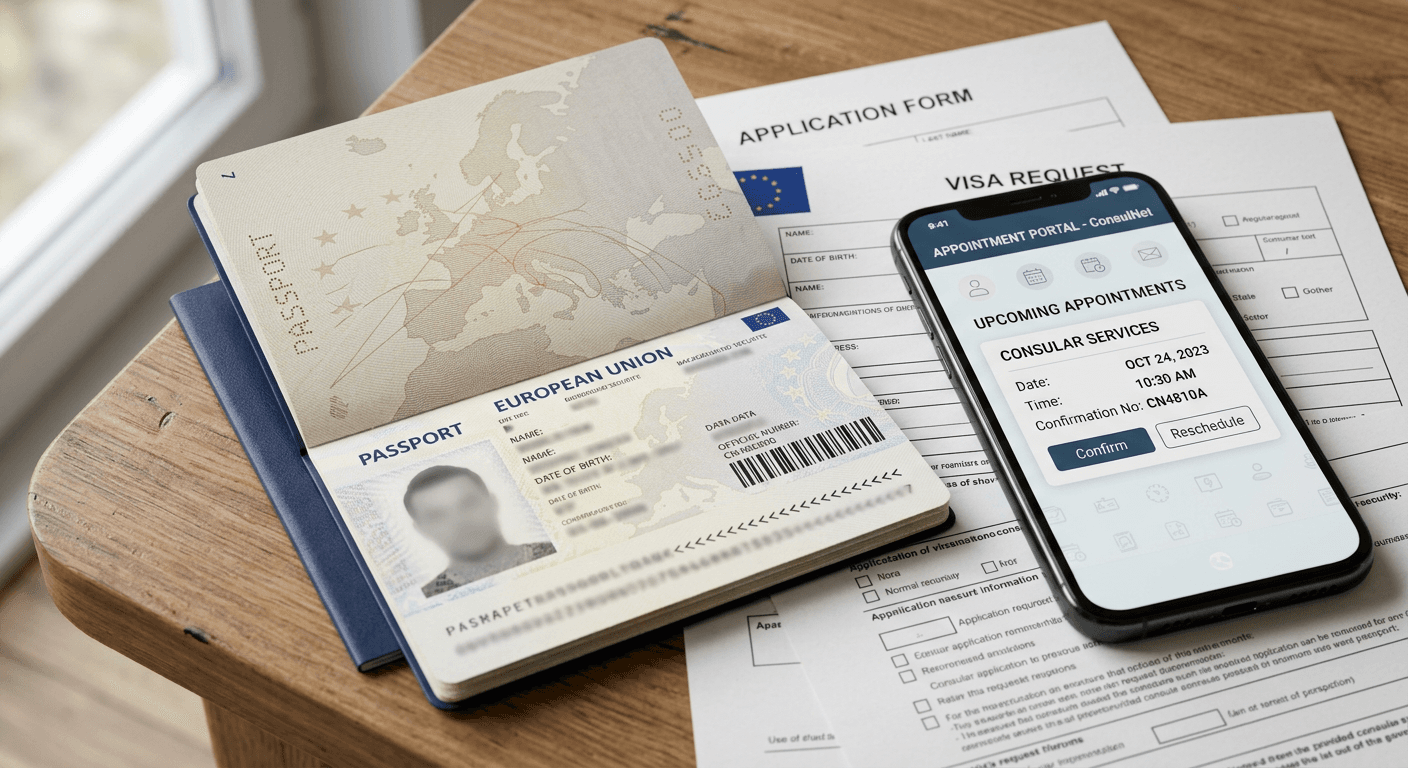
A common operational misunderstanding among expatriates is the assumption that replacing a spanish passport in a foreign country operates on the exact same timeline and administrative logic as their home municipality. This fundamental misconception about sovereign representation leads to stalled applications, rejected biometric submissions, and entirely avoidable travel delays. Consulates do not function as localized printing facilities; they operate as secure data relays connected directly to central national registries via diplomatic channels. Navigating the renewal of a travel document while living in Germany means understanding exactly how your home country routes data, enforces appointment queues, and processes physical biometrics.
Quick Summary
Managing European travel documents as a resident in Germany requires utilizing specific consular or municipal channels that dictate how biometric data and civil registry information are captured. The administrative workflow entirely depends on citizenship, splitting the procedure into digital-first portals, direct embassy appointments, or local district processing.
- The Spanish Embassy route demands localized biometric capture but validates identity via Madrid's central database.
- The Croatian and Polish systems utilize centralized scheduling portals that force users to secure limited slots before physical documents are assessed.
- German municipal offices manage domestic identities through decentralized district branches, directly interfacing with the federal printing office.
- Strict compliance with International Civil Aviation Organization (ICAO) photographic standards is universally enforced across all channels, regardless of the booking modality.
Table of Contents
- Quick Summary
- Comparison Table
- Buying Guide: How to Navigate Consular Operations
- 1. Sección Consular de la Embajada de España en Berlín
- 2. Kroatisches Konsularportal
- 3. Ambasada i Konsulaty RP w Niemczech
- 4. Bürgeramt
- Structuring Your Approach by Administrative Category
- Recommended Reads
Comparison Table
| Platform | Administrative Jurisdiction | Features | Pros | Cons | Target Audience |
|---|---|---|---|---|---|
| Sección Consular de la Embajada de España en Berlín | Direct Consular Access | In-person biometrics, diplomatic pouch delivery, civil registry validation | Direct staff interaction, clear document validation, secure handling | Requires travel to Berlin, rigid processing times, physical queuing | Spanish citizens residing across Germany requiring immediate service |
| Kroatisches Konsularportal | Centralized Consular Portal | Unified appointment scheduling, digital pre-screening, integrated document checklists | Prevents walk-in congestion, clear prerequisite lists, systematic queueing | High dependency on portal uptime, strict scheduling gates, lacks emergency overrides | Croatian expatriates preparing long-term renewals |
| Ambasada i Konsulaty RP w Niemczech | Centralized Consular Portal | Location-based routing, digital data intake, standardized tracking | Balances load across cities, prevents localized bottlenecks, uniform standards | Aggressive session timeouts, high barrier to entry, strict data formatting | Polish nationals managing documents across multiple German jurisdictions |
| Bürgeramt | Municipal Administration | Direct federal printing integration, simultaneous document processing, local access | District-level proximity, integrated identity checks, standard local procedures | Wildly variable wait times, fragmented booking systems, strict local autonomy | German citizens managing domestic identity credentials |
Buying Guide: How to Navigate Consular Operations
The infrastructure supporting international document renewal is distinctly separated by a classification lens we define as Administrative Jurisdiction. This lens dictates where the technical processing actually occurs, who controls the appointment calendar, and how your biometric data flows from a desk in Germany to a central database in your home country. Understanding these categories is critical because applying municipal expectations to a centralized consular system will result in rejection.
The first category is Direct Consular Access. This model requires applicants to interact directly with the specific physical embassy or consulate holding territorial jurisdiction over their residence. The front-end interaction is highly manual, relying on physical document presentation and localized biometric capture. It suits citizens whose home countries have not yet virtualized the intake process, but it heavily penalizes individuals living far from the capital city.
The second category is the Centralized Consular Portal. Rather than allowing physical walk-ins or localized email booking, the home country's Ministry of Foreign Affairs imposes a unified digital gateway. Every appointment, regardless of which German city the consulate is in, must be secured through a single central server. This load-balances the administrative burden and ensures that incomplete files never reach a consular officer's desk. You cannot bypass the portal by showing up at the gate.
Practical rule: Never arrive at a consular office without printing the digital confirmation receipt generated by the centralized portal; physical security teams use these receipts to control building access, not just the administrative queue.
The final category is Municipal Administration. This applies exclusively to the domestic infrastructure of the host country - in this case, Germany's local district offices. Unlike foreign missions, these offices are deeply integrated with the host nation's civil infrastructure, meaning data verification happens laterally across municipal databases rather than vertically to a foreign capital.
Regardless of the jurisdiction, the failure mode across all these systems remains identical: non-compliant biometrics. Consulates enforce strict international documentation guidelines based on ICAO specifications. If the physical photographs submitted do not align perfectly with the required dimensions, background color, and facial mapping standards, the receiving officer will reject the application immediately. The software used by foreign ministries to digitize these images automatically flags disproportionate head sizes or incorrect contrast levels, entirely removing human discretion from the approval process.
1. Sección Consular de la Embajada de España en Berlín
The operational failure most applicants encounter here is assuming the local embassy handles all paperwork autonomously without pre-verifying against external records. The Sección Consular de la Embajada de España en Berlín acts as the official diplomatic relay for Spanish citizens residing in Germany, facilitating document renewals by functioning as a secure terminal connected to Madrid.
Operating strictly within the Direct Consular Access category, the embassy physically executes the biometric capture and identity verification. Decisioning and document production occur in Spain. The mechanism relies on matching the applicant's presented physical identity against the central Spanish civil registry (Registro Civil Central). Once verified locally, the data is encrypted and transmitted to the Fábrica Nacional de Moneda y Timbre. The physical booklet is manufactured there. It ships back to Berlin via diplomatic pouch. You must arrive with exact compliance to standard processing terms and conditions regarding civil status documentation. Local officers cannot override registry discrepancies found in the central database.
Physical presence enforces geographic limits
The absolute reliance on localized, in-person processing creates a severe geographic bottleneck. Because the system lacks a decentralized data intake mechanism for remote residents, citizens living in Bavaria or North Rhine-Westphalia are forced to absorb significant travel costs and logistical downtime just to scan a fingerprint. The infrastructure actively penalizes distance, making a standard ten-minute administrative task a multi-day logistical requirement for anyone outside the capital.
We advise selecting this route specifically when a first-time applicant lacks previous digital registration in the central system, as the in-person identity verification remains a strict legal requirement.
Pros
- Bypasses digital portal errors through direct human validation
- Handles complex civil registry anomalies on-site
- Secures transit via official diplomatic courier channels
Cons
- Demands significant travel for non-Berlin residents
- Relies on manual queue management and physical waiting rooms
- Processing speed is dictated strictly by physical pouch shipping cycles
2. Kroatisches Konsularportal
Data flows directly into Zagreb's centralized database through a rigid scheduling matrix before the applicant ever steps into a physical building in Germany. The Kroatisches Konsularportal serves as the mandated gateway for the Croatian Ministry of Foreign and European Affairs, shifting the administrative heavy lifting onto the user prior to any official interaction.
Falling under the Centralized Consular Portal category, this system actively filters out incomplete applications. When an applicant initiates a request for a kroatischer reisepass, the portal cross-references the requested service type against appointment availability at the specific regional consulate. The mechanism here is essentially an institutional firewall: the system requires applicants to select exact service codes and acknowledge documentation requirements before unlocking calendar dates. This ensures that the consular officers only interface with individuals whose civil records are already internally flagged for review. If an applicant runs into digital errors during this intake phase, they must rely on formal troubleshooting documentation formats rather than walking into the consulate for technical support.
Digital intake bottlenecks physical appointments
The high dependency on platform uptime means that digital congestion completely freezes physical processing. If the portal experiences database synchronization issues with Zagreb, no local consular officer in Frankfurt or Munich can manually override the system to grant a walk-in appointment. The system eliminates physical lines by replacing them with an opaque digital waiting room, removing any flexibility for urgent travel situations that fall slightly outside official emergency parameters.
If you hold all required supporting documents in a digitized format and can navigate rigid calendar interfaces, this unified portal removes the uncertainty of walking into an office unannounced.
Pros
- Eliminates unpredictable physical queue times at consulates
- Standardizes prerequisite checks across all German branches
- Prevents applicants from arriving with incorrect documentation
Cons
- Lacks an effective bypass mechanism for non-standard emergencies
- Portal synchronization failures halt all regional booking
- Demands high digital literacy to secure standard time slots
3. Ambasada i Konsulaty RP w Niemczech
A rapidly expiring travel document forces residents to navigate the e-konsulat system under a tight deadline, exposing how load-balanced infrastructure handles peak volume. The Ambasada i Konsulaty RP w Niemczech operates as the official routing platform for Polish passport services across German territory.
Your specific German postal code dictates the routing. Functioning primarily as a regional distribution tool, this platform defines the Centralized Consular Portal category. Securing a polnische reisepass through the e-konsulat platform requires the backend system to route the applicant to the correct consular jurisdiction (e.g., Berlin, Cologne, or Munich). The mechanism relies on session-based data entry. The applicant inputs their PESEL (national identification number) and civil data. The server temporarily locks the chosen appointment slot while verifying the data string format. If verification passes, the data is pushed to the respective consulate's daily ledger. This generates a secure barcode. The applicant must present it upon arrival.
Practical rule: Never refresh the browser during the final verification stage of a centralized consular booking; session state drops immediately, and the selected time slot remains locked out of the available pool for up to thirty minutes.
Fragmented physical locations require centralized digital tracking
The system enforces aggressive session timeouts that routinely punish users who pause to gather required details mid-application. Because the portal manages thousands of simultaneous connections across Europe, it affords zero leniency for slow data entry. An applicant who spends too long verifying a secondary civil registry number will find their session terminated, forcing them back to the start of a queue where their previously selected appointment date is no longer available.
We would hold off on initiating a session here until every physical document, civil identification number, and biometric verification is laid out on the desk before opening the browser.
Pros
- Effectively prevents cross-jurisdictional booking errors
- Encrypts civil data before transmission to local consulates
- Generates auditable barcodes that expedite physical entry
Cons
- Aggressive session timeouts frustrate complex data entry
- High volume routinely crashes the available appointment calendar
- Offers zero visibility into cancellation slots in real-time
4. Bürgeramt
A local resident walking into their district administrative office expects a seamless biometric capture, only to be turned away at the desk for missing a digitally pre-booked slot. The Bürgeramt represents the backbone of German municipal infrastructure, handling domestic identity documents rather than foreign passports.
Anchoring the Municipal Administration category, this network operates on decentralized execution tied to centralized production. Processing a personalausweis reisepass application simultaneously reduces the administrative burden on the citizen, but the actual mechanism involves the local district office acting strictly as a data collection point. The municipal clerk verifies domestic residency (Meldebescheinigung) and captures biometrics, which are immediately verified against German biometric specifications for infants and adults alike. The approved packet is then transmitted via secure federal networks to the Bundesdruckerei (Federal Printing Office) in Berlin. Once manufactured, the physical documents are routed back to the exact municipal office for final issuance and activation.
Decentralized execution creates neighborhood-level variations
The fierce autonomy of municipal offices means that processing availability fluctuates wildly depending entirely on which specific city district you reside in. An applicant in a densely populated metropolitan borough may face a six-week digital queue just to secure a ten-minute desk appointment, while an applicant in a peripheral district might secure a slot the next morning. This decentralization prevents the system from load-balancing efficiently, trapping residents in the administrative backlog of their specific postal code.
What would make us hesitate here is the lack of standardized appointment availability across districts, requiring users to constantly refresh local booking pages at arbitrary morning hours to secure canceled slots.
Pros
- Consolidates travel documents and domestic identity into one visit
- Allows physical pickup relatively close to the applicant's residence
- Integrates seamlessly with domestic residency databases
Cons
- Appointment availability is entirely dictated by local district funding
- Fragmented municipal websites offer inconsistent booking experiences
- Prevents utilizing faster queues in neighboring municipal districts
Structuring Your Approach by Administrative Category
Mapping your application strategy directly to the governing infrastructure prevents stalled paperwork and costly re-submissions.
If you fall under Direct Consular Access, your primary limitation is geography. You must optimize your physical visit by ensuring absolute compliance before travel, as a single missing civil document or an improperly formatted photograph will require a second cross-country trip. There is no digital safety net to catch errors before you arrive at the desk.
If you must navigate a Centralized Consular Portal, your bottleneck is purely digital timing. The strategy here shifts to strict preparation prior to opening a browser session. Because these systems drop idle connections and lock calendars rapidly, having your national identification numbers and digitized supporting documents instantly available dictates whether you secure an appointment or face a two-month delay.
If you are operating within Municipal Administration, your challenge is local load-balancing. Because district offices handle everything from vehicle registrations to residency declarations, the identity credential queue is constantly congested. Securing an appointment requires understanding your specific municipality's daily refresh cycles for booking slots. Finally, regardless of the route, securing a guarantee against photo rejection by standardizing your biometric submissions prior to any appointment remains the most effective way to eliminate the most common cause of administrative failure.