7 Rules for Checking Your Passport Expiration Date Before Family Travel
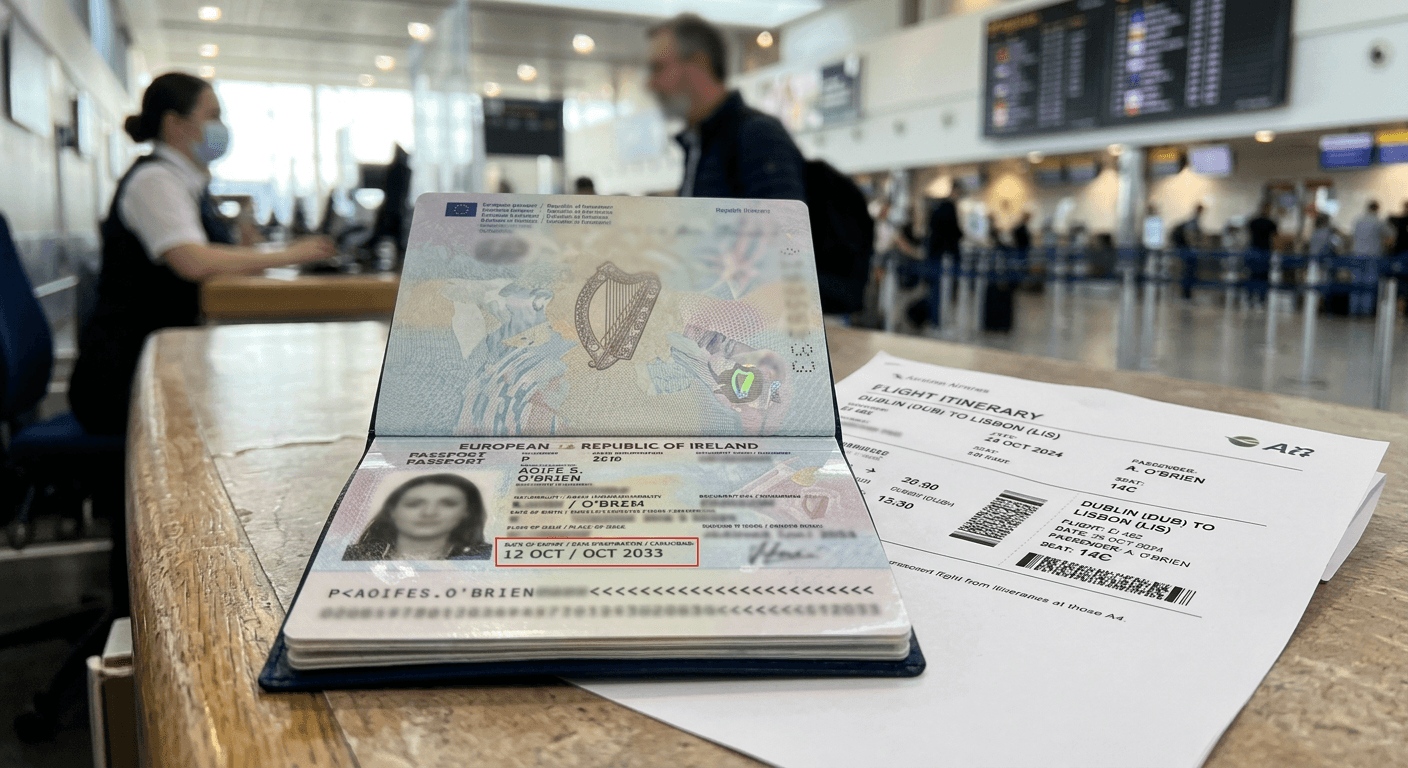
Standing at the airport check-in counter and handing over a stack of family travel documents, only for the airline agent to flag your infant's document because it expires in five months, is a catastrophic way to start a trip. Most travelers assume that a document is valid right up until the date printed on its data page. In border control and international aviation, this is entirely false.
Your passport expiration date is rarely the actual date your travel privileges end. Depending on your destination, your airline, and the age of the passport holder, the functional lifespan of the document shuts down months earlier. The rules governing this are fragmented across bilateral agreements, aviation software logic, and regional treaties.
Evaluating Validity Rules
To interpret how long a document is actually good for, we evaluate two distinct criteria: the statutory entry requirement of your destination country, and the operational enforcement by your airline's check-in software. Because commercial carriers face heavy fines for transporting inadmissible passengers, airline software often applies a more rigid standard than the border guards themselves. Understanding which system is evaluating your document tells you exactly when to apply for a renewal.
Quick Summary
A passport expiration date dictates when a document ceases to be an internationally recognized proof of identity, but travel privileges typically end three to six months prior to that date. Navigating these timelines requires checking destination entry laws against airline software configurations.
- Most non-EU nations require six months of validity beyond your departure date.
- Schengen area rules require three months of validity past your intended exit.
- Infant documents age out of their biometric validity faster than adult books.
- Bilateral agreements frequently override standard expiration thresholds.
- Airlines enforce rigid software blocks that ignore border guard discretion.
Table of Contents
- 1. The Six-Month Validity Standard
- 2. The Schengen Three-Month Requirement
- 3. Accelerated Expiration for Infant Passports
- 4. Standard United States Entry Policies
- 5. The Overlapping Visa and Passport Expiration Dilemma
- 6. The Ten-Year Maximum Issue Date Rule
- 7. The Six-Month Club Exemptions
- Mapping Your Expiration Scenarios
- FAQ
- Recommended Reads
1. The Six-Month Validity Standard
Many international destinations require travelers to hold a document that remains valid for at least six months beyond their planned date of departure. This rule prevents foreign nationals from becoming stranded if they fall ill, face legal delays, or experience flight cancellations that extend their trip beyond the document's lifespan. The calculation typically begins on the day you intend to leave the host country, not the day you arrive. Immigration systems automatically flag inbound passengers whose documents fall short of this window.
When a document approaches this boundary, border guards cannot process standard tourist visas or entry stamps. The mechanism relies on the Advanced Passenger Information System (APIS). When you check in, the airline transmits your data to the destination country's immigration authority. If the system detects a shortfall in validity, it returns a hard rejection to the gate agent.
Airline software enforces limits earlier than immigration laws
Border guards sometimes hold discretionary power. They may admit a traveler with borderline validity. Airline software operates on strict binary rules instead. Check-in kiosks will hard-lock your boarding pass if you are even one day short of the six-month mark. Carriers face severe fines for transporting an inadmissible passenger. They also bear the full cost of the return flight. Consequently, their IT systems strip away all nuance.
This standard breaks down for travelers holding open-ended tickets. If you cannot provide a confirmed outbound flight, airline algorithms calculate the six months starting from the maximum allowable stay of your visa class. For a 90-day tourist visa, the software checks for nine months of total validity from your arrival date, which frequently catches travelers off guard.
2. The Schengen Three-Month Requirement
Travelers entering the European Schengen Area from a third country are bound by a different calculation: the passport must remain valid for at least three months beyond the date the traveler plans to leave the zone. When consulting regional portals or German civic offices, expatriates will frequently encounter the term reisepass gültigkeit denoting this specific regulatory window. It applies strictly to non-EU citizens crossing the external Schengen border.
The mechanism tracks the 90/180-day rule. Immigration databases verify that the physical book outlasts your maximum legal stay plus a 90-day grace period. If you book a flight from London to Berlin, your document must carry enough remaining time to satisfy both the length of your holiday and this buffer.
Internal border checks still trigger airline denials
Although the Schengen Zone operates without routine internal border checks, flying between member states still requires the document to meet the standard. An airline checking your document for a flight from Madrid to Munich will run the exact same validity algorithm as a flight from outside the zone.
This rule severely limits expatriates who maintain third-country passports while living in Europe. If your residency permit is tied to your passport, the permit functionally expires the moment the passport hits the three-month threshold. Dual citizens entering their passport's home country bypass this entirely, as you cannot be denied entry to your nation of citizenship regardless of the remaining validity.
3. Accelerated Expiration for Infant Passports
Unlike adult travel documents, which typically last ten years, infant and child passports are intentionally issued with accelerated lifespans - usually five years or less. Governments limit their validity because pediatric facial structures change rapidly, rendering the original biometric data obsolete. For families, this means a child's document will likely need replacement long before the parents' documents do.
When you renew, generating an image that passes automated border control gates is critical. Submitting a non-compliant image will halt the issuance process entirely. Reviewing specific formatting rules in a Germany Baby Passport Photo Guide ensures the head proportions and background colors meet the strict standards required for biometric chips.
Facial biometrics age out before the document expires
A child's passport may technically remain valid on paper, but border guards hold the authority to reject it if the photograph no longer identifies the bearer. A two-month-old infant looks fundamentally different from a four-year-old toddler. When e-passport gates fail to match a child's face to the chip data, border personnel conduct manual reviews that can lead to heavy questioning.
Practical rule: Never rely on the expiration date alone for children under five. If the child is unrecognizable from their original photograph, apply for a replacement document before booking international flights.
4. Standard United States Entry Policies
Navigating the entry requirements for North America introduces highly specific compliance checks. Travelers researching a reisepass einreise usa scenario must ensure their document meets the baseline federal requirement: six months of validity beyond the intended period of stay. The US Customs and Border Protection (CBP) relies on automated scanners that instantly check the expiration fields against the departure flight manifests.
The system cross-references the physical document with the visa class. Because biometric standards are rigorously enforced, securing the correct initial photo format is non-negotiable. Preparing an application using a United States Baby Passport Photo Guide prevents the bureaucratic delays that occur when a document is rejected for failing the 2x2 inch sizing matrix.
Digital travel authorizations do not override physical document expiration
Securing an approved Electronic System for Travel Authorization (ESTA) does not guarantee entry. An ESTA is generally valid for two years, but if the passport linked to it expires sooner, the ESTA dies with it.
Travelers frequently arrive at the airport holding a printed ESTA that shows another year of validity, only to be denied boarding because the physical passport fails the six-month rule. The digital authorization is merely permission to travel to the border; it is the physical book that governs admissibility. This structure does not suit long-term visa holders, who face entirely separate date mismatch issues.
5. The Overlapping Visa and Passport Expiration Dilemma
A common logistical failure occurs when a passport expires, but it contains a multi-year visa that is still entirely valid. Visas are generally not tied to the expiration of the passport book they are stamped into, creating a situation where the traveler holds a dead document housing live travel privileges.
The mechanism to resolve this is known as traveling with two passports. You must present the newly issued, valid passport alongside the expired, clipped passport containing the unblemished visa. Border guards scan the new document for identity and security checks, and manually verify the visa in the old book.
Transferring visas often requires re-applying entirely
Do not attempt to peel or physically transfer a visa sticker from an expired book to a new one. Tampering with the laminate instantly voids the visa and triggers fraud alerts at the border.
While carrying two books works for the US and the UK, many jurisdictions explicitly forbid it. Certain Middle Eastern and Asian countries require the visa to be physically located in the currently valid passport. In these regions, an expired passport automatically cancels the visa inside it, forcing you to pay for and process a complete visa renewal. Check the specific consulate rules before showing up at border control with two books.
6. The Ten-Year Maximum Issue Date Rule
Some countries historically allowed citizens to extend the life of a passport by adding an official stamp or endorsement to the back pages, pushing the validity past the ten-year mark. The global transition to e-passports has aggressively phased out this practice, replacing it with a hard ten-year limit calculated strictly from the date of issue.
The Schengen border code explicitly states that third-country passports must have been issued within the previous ten years. If your document was issued twelve years ago but contains an extension stamp making it technically valid for another year, European border systems will still reject it.
Extensions added to old books fail electronic scans
Modern biometric chips are hard-coded with the original issuance and expiration dates. A physical ink stamp extending the validity cannot rewrite the cryptographic data stored on the RFID chip. When you place an extended passport on an e-gate scanner, the machine reads the original, expired chip data and throws a fatal error.
This limit primarily traps adults from nations that still offer manual extensions to save printing costs. It rarely affects infants, but it is a critical failure mode for parents managing the entire family's documents. If a country offers you an extension stamp instead of a newly printed book, decline it and demand a fresh document if you intend to travel internationally.
7. The Six-Month Club Exemptions
Strict validity rules are frequently bypassed by bilateral agreements. The most prominent example is the "Six-Month Club," an agreement the US holds with over 100 nations. When applying a reisepass gültigkeit usa calculation for a traveler from an exempt country, the six-month rule is waived. The traveler only needs a passport valid for their intended period of stay.
If an exempt traveler books a two-week holiday to New York, their document only needs to be valid for those specific fourteen days. The mechanism relies on diplomatic reciprocity, ensuring that citizens of both treaty nations face fewer bureaucratic hurdles during short-term tourism.
Aviation software often misses bilateral exemptions
The critical flaw in the Six-Month Club is that regional airline carriers frequently fail to code these exemptions into their departure software. If you fly a budget carrier out of a non-exempt third country to connect to a US flight, the local check-in software will likely enforce the standard six-month rule, completely ignoring your citizenship's treaty rights.
Practical rule: If you rely on a bilateral exemption to travel with borderline passport validity, print the specific treaty text from the destination country's official government portal and hand it to the airline gate agent during check-in.
Mapping Your Expiration Scenarios
Deciding when to act on an aging document depends entirely on your travel profile and destination matrix.
- If your bottleneck is navigating strict European external borders, treat the expiration date as arriving three months early. Renew in that window to ensure uninterrupted access.
- If you hold tickets for a multi-country trip across Asia or the Middle East, enforce a strict six-month buffer. The cascading rules of different border agencies make traveling with borderline validity highly volatile.
- If you are managing documents for an infant or a toddler, ignore the printed date and assess the child's facial changes. If e-gates consistently fail to read the biometric match, replace the book regardless of the time left on it.
Travelers should skip trying to leverage bilateral exemptions unless absolutely necessary. Relying on an airline agent to manually override their kiosk software using a printed treaty agreement is a high-stress gamble that often results in missed flights.
FAQ
Do infants need their own passports or can they travel on a parent's document? Virtually all international aviation authorities now mandate that infants hold their own dedicated travel document. The outdated practice of appending a child to a parent's passport has been abolished to combat international child trafficking and comply with biometric standards.
Why did my airline deny boarding when my passport is valid for another four months? Your destination country likely enforces a six-month validity rule. Airline check-in software automatically blocks boarding passes for documents that fail this APIS calculation, as the airline is financially liable for returning you if immigration denies you entry.
Does transferring a visa to a new passport invalidate it? You cannot physically transfer a visa sticker. Tampering with it voids the visa. You must carry both the old passport containing the valid visa and the newly issued passport, unless the destination country explicitly requires you to apply for a fresh visa in the new book.
How does the issue date affect my ability to travel? Certain regions, particularly the Schengen Area, require documents to have been issued within the last ten years. Passports that were manually extended beyond a ten-year lifespan are rejected, regardless of the expiration date printed or stamped inside.