Decoding Official Passport Photo Requirements for 2026
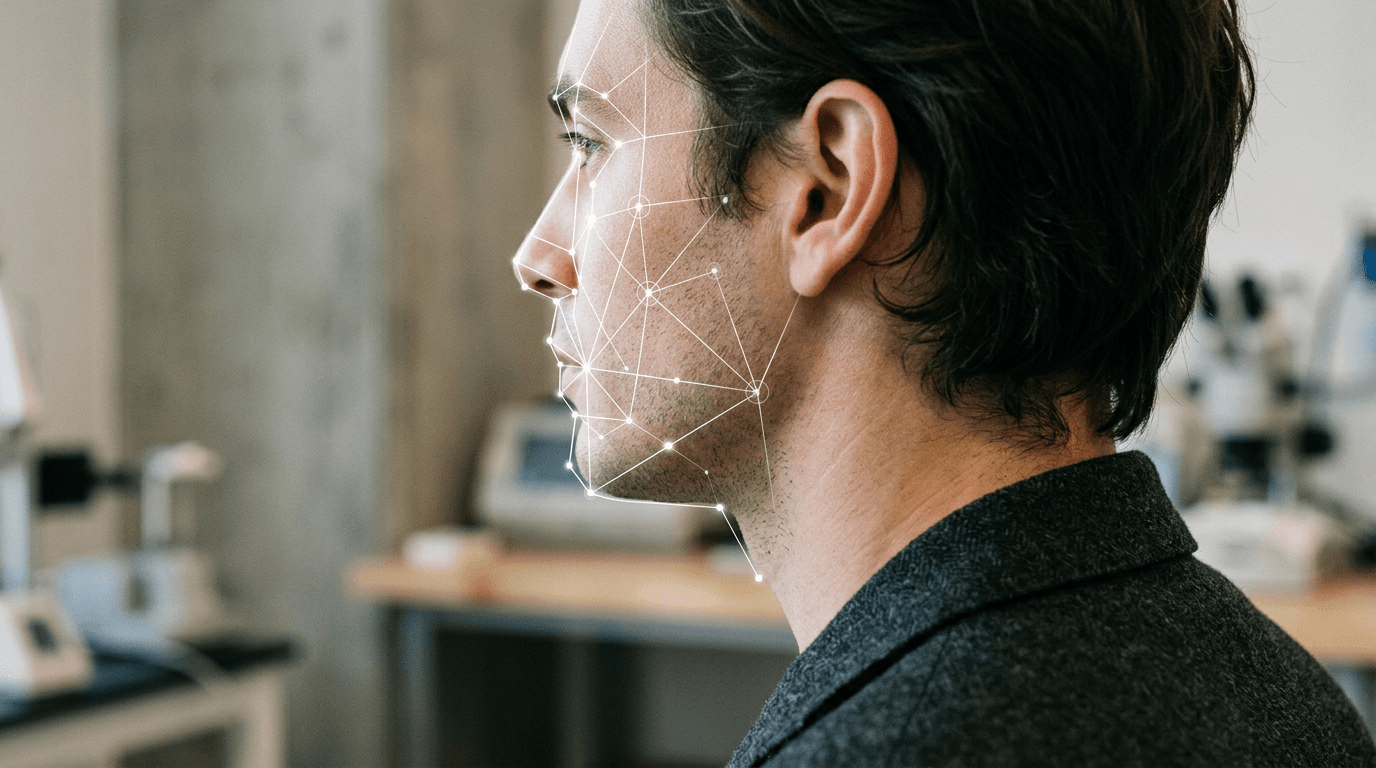
You are staring at a rejected visa application email, reading that a faint shadow behind an infant's left ear triggered a biometric failure. Official government document images are no longer evaluated primarily by a human clerk at a desk verifying a likeness. Instead, they are parsed by automated facial recognition scanners looking for exact spatial anchors on a two-dimensional plane. A shadow is not just poor lighting to an algorithm; it is registered as an asymmetrical structural defect in the jawline, leading to instant rejection.
Quick Summary
Official government ID images are strictly regulated inputs for biometric facial recognition systems, requiring exact dimensional, lighting, and postural compliance to function. Understanding the mechanical reasons behind these rules prevents costly application delays.
- Algorithms measure the interpupillary distance and the ratio of the chin to the crown.
- Shadows create false structural edges that biometric edge-detection software flags as physical anomalies.
- Strict rules around neutral expressions are relaxed slightly for infants, though eye visibility remains non-negotiable.
- Digital compression artifacts near the jawline frequently cause rejections in automated online application portals.
Table of Contents
- Why Biometric Algorithms Dictate Passport Photo Requirements
- How Head Proportions Dictate Scanner Acceptance
- Why Illumination Artifacts Trigger Automated Rejections
- Managing Involuntary Posture in Infant Biometrics
- Where British Processing Diverges From Schengen Rules
- How Compression Artifacts Sabotage Digital Submissions
- Comparison Table of Global Specifications
- FAQ
- Recommended Reads
Why Biometric Algorithms Dictate Passport Photo Requirements
The foundational rules governing international travel documents originate from the International Civil Aviation Organization (ICAO). Their passport photo requirements are designed to feed the ISO/IEC 19794-5 biometric standard. When an image enters a government portal, the software immediately attempts to locate the center of the eyes, the tip of the nose, and the corners of the mouth.
If a subject smiles, the corners of the mouth elevate and the cheeks push upward, artificially narrowing the eyes. Because facial recognition software uses the fixed distance between the pupils as the baseline scale for the rest of the facial map, any distortion of the eye shape compromises the entire scan. This is why a neutral expression is mandatory for adults. The software measures the geometry of the face, not the subjective likeness of the individual. Understanding this distinction is the key to passing modern automated checks.
How Head Proportions Dictate Scanner Acceptance
Governments dictate total image dimensions, but the internal crop of the face is far more critical to biometric success. If a face is situated too far back, the scanner lacks the pixel density to measure the distance between facial landmarks. If the face is too close, the algorithm cannot map the outer contour of the jaw and head, which it needs to distinguish the subject from the background.
Take the standard passport size photo germany requires. The external dimensions are strictly 35 by 45 millimeters. However, out of those 45 millimeters in height, the face itself - measured from the tip of the chin to the crown of the head - must occupy precisely 32 to 36 millimeters. This leaves a minuscule margin of just 9 to 13 millimeters to distribute above the head and below the chin. When parents attempt to manually crop a picture, they routinely miss this internal proportion rule, leading to a rejection even if the outer dimensions are perfectly cut.
Practical rule: Never crop a high-resolution image to the final millimeter dimensions on a smartphone before uploading it to a processing tool; keep a wide margin around the shoulders and above the head so the software can locate the chin and crown dynamically.
For residents navigating specific European parameters, consulting a specialized Germany Baby Passport Photo Guide reveals exactly how to center an infant to ensure the face takes up the correct proportion of the image height without cutting off the shoulders.
Why Illumination Artifacts Trigger Automated Rejections
Human eyes easily distinguish between a dark shadow cast on a wall and the physical edge of a person's cheek. Edge-detection software does not. Algorithms determine the perimeter of a face by detecting abrupt shifts in contrast.

When a strong directional light casts a shadow on one side of the nose or neck, the software registers that shadow as a physical indentation. This causes the scanner to conclude the face is fundamentally asymmetrical, triggering a system failure. Lighting must be entirely flat and diffuse. This is typically achieved by positioning the subject facing a large window during daylight hours, ensuring the light hits both sides of the face equally.
Background shadows present a secondary failure mode. Even if the face is perfectly lit, a drop shadow cast onto the wall behind the subject confuses the background-subtraction algorithms used by government portals to isolate the subject. General EU & International Baby Passport Photo Requirements & Guides explicitly dictate a uniform, untextured background to prevent these false boundary readings.
Managing Involuntary Posture in Infant Biometrics
Applying strict biometric rules to infants under twelve months introduces distinct mechanical problems. Newborns cannot follow instructions, support their own heads, or reliably keep their eyes open on command. ICAO standards make specific allowances for these physical limits, but those allowances are narrow and frequently misunderstood.
The requirement for a closed mouth is generally relaxed for infants under one year, as controlling the jaw is often impossible. However, the eyes must remain open and visible. The most frequent failure mode in infant photography is occlusion: a parent's hand supporting the baby's neck accidentally entering the frame, or a pacifier obscuring the chin. The algorithm cannot process a face if an unmapped object covers a primary landmark.
To capture a compliant image without hands in the frame, the subject must often be placed on their back on a plain sheet. Alternatively, they can be seated in a car seat draped with a uniform cloth. Software automation has largely replaced the need for manual background editing in these scenarios. A dedicated EU Baby Passport Photo Maker platform utilizes AI to separate the infant from the draped car seat, provided the face is well-lit and unobstructed.
Where British Processing Diverges From Schengen Rules
While most European countries adhere strictly to ICAO baseline recommendations, individual nations apply distinct interpretations of background color and digital formatting. The uk passport photo requirements are particularly distinct regarding background shade. While many countries request a stark white background, His Majesty's Passport Office explicitly mandates a light grey or cream background. A purely white background often results in a rejection because it can cause the edges of pale skin or light hair to blow out and blend into the background, defeating the edge-detection scanner.
Furthermore, the United Kingdom utilizes a centralized digital code system for applications. When submitting a digital uk passport photo, the file must be unaltered by cosmetic filters and meet exact file size minimums (usually 50KB to 10MB) and pixel dimensions (at least 600 pixels wide by 750 pixels tall). These distinct thresholds require careful preparation, which is why referring to a detailed United Kingdom Baby Passport Photo Guide is critical for families applying for British documentation.
How Compression Artifacts Sabotage Digital Submissions
The shift from printed applications to digital upload portals has introduced a new class of rejection: digital compression. When an image is saved as a highly compressed JPEG, or sent through messaging applications like WhatsApp, the software deletes fine pixel data to reduce file size.
This deletion causes pixelation, particularly along high-contrast boundaries like the line between the jaw and the background. Automated government systems run secondary checks to detect digital tampering. Compression artifacts look mathematically identical to the artifacts left behind by crude background-removal tools (like the magic wand tool in consumer editing software). Consequently, the portal assumes the image has been artificially altered and rejects it.
Practical rule: Always export digital submissions as high-quality, uncompressed files directly from the source camera or processing software; sending the file through a social media or messaging app will strip the metadata and apply aggressive compression that guarantees rejection.
Maintaining a minimum of 300 Dots Per Inch (DPI) is necessary if the digital file will eventually be printed by the receiving consulate. Understanding how digital resolution translates to physical print density resolves the majority of technical errors encountered by users. For extensive troubleshooting on digital artifacts, reviewing a platform's Help Center clarifies the exact digital parameters required before submission.
Comparison Table of Global Specifications
To highlight how algorithmic demands vary by jurisdiction, the following table breaks down the core structural limits imposed by major processing regions.
| Specification | Germany / Schengen Area | United Kingdom | United States |
|---|---|---|---|
| Total Dimensions | 35 x 45 mm | 35 x 45 mm (Print) / 600x750 px (Digital) | 2 x 2 inches (51 x 51 mm) |
| Head Proportion | 32 to 36 mm | 29 to 34 mm | 1 to 1 3/8 inches (25 to 35 mm) |
| Background Color | Light grey or uniform white | Light grey or cream (No white) | Plain white or off-white |
| Infant Exemptions | Mouth can be slightly open (under 1 yr) | Toys/hands forbidden, eyes must be open | Eyes can be closed for newborns only |
| Digital DPI | 300 DPI minimum | 300 DPI (minimum 50KB file size) | 300 DPI (minimum 600x600 pixels) |
For families dealing with non-European standards, consulting a regional resource like a United States Baby Passport Photo Guide is necessary, as the US utilizes a square 2x2 inch format that dramatically alters the required field of view and cropping methodology.
FAQ
Can an infant's eyes be closed in an official photo?
No. While ICAO standards relax the closed-mouth rule for children under one year of age, the eyes must remain visible and unobstructed. The scanner relies on the pupils to establish the baseline horizontal axis of the face. The single exception is the US, which occasionally permits closed eyes for newborns, though open eyes are strongly advised to prevent processing delays.
Why was my image rejected for "altered background" when I didn't edit it?
Government portals use algorithms to detect manipulation. If you took the picture with poor lighting or compressed the file too heavily, the pixel artifacts around the jawline mimic the digital footprint of artificial background replacement. Submitting high-resolution, uncompressed files prevents this false flag.
Is there a difference between European and UK sizing?
Physically printed sizes are identical (35x45mm). However, the internal face proportion requirements differ. Germany requires the head to measure 32-36mm, while the UK requires 29-34mm. Furthermore, the UK strictly prohibits stark white backgrounds, whereas they are commonly accepted in Schengen applications.
How do I prevent shadows when laying a baby down?
Position the infant on a plain, light-colored sheet directly facing a large window during the day. Ensure the light falls evenly across the face. Avoid using overhead artificial room lighting, as it casts hard shadows downward beneath the nose and chin, which biometric scanners interpret as facial deformities.