Decoding the 2026 Chip Standards of a biometrischer reisepass
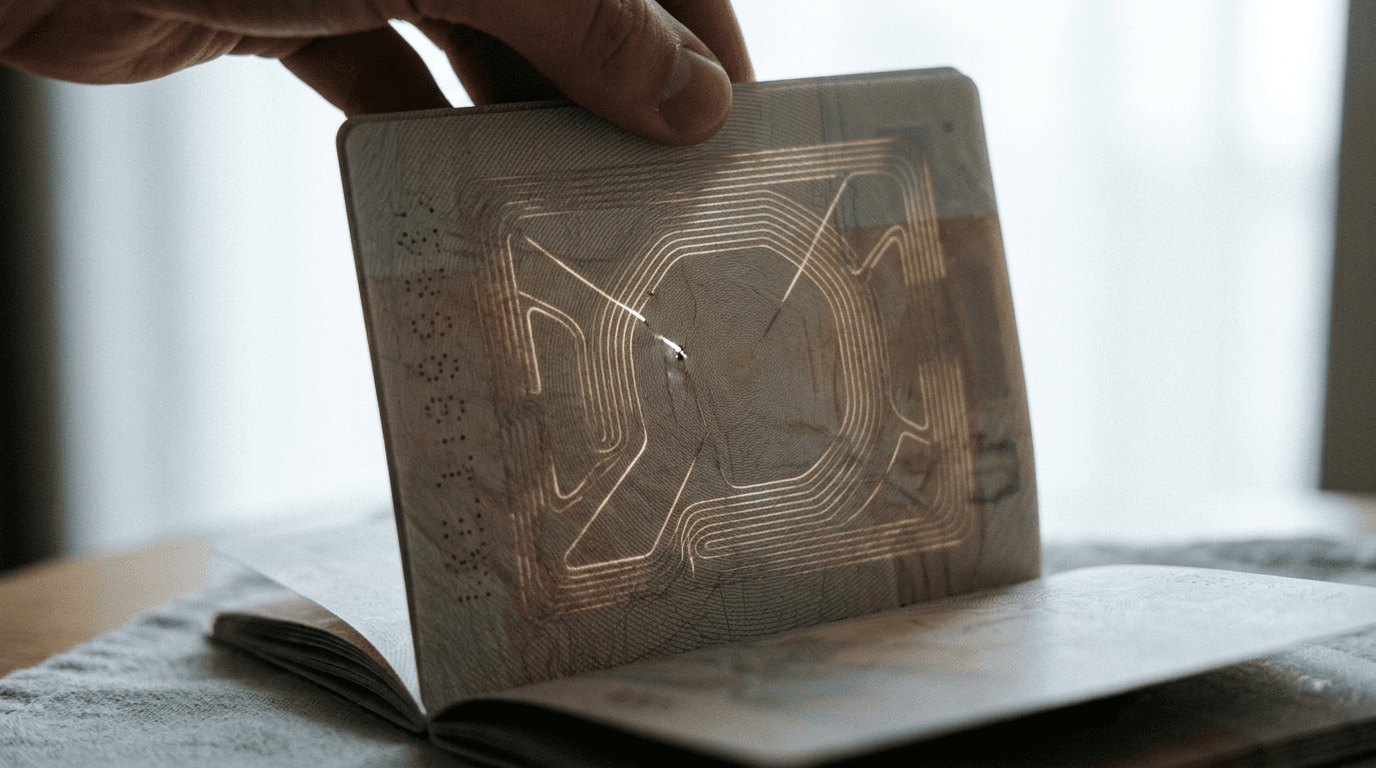
The majority of read failures at automated border control gates happen because the microscopic copper antenna woven into the document snaps, not because the microprocessor itself degrades. When a traveler hands over a newly issued biometrischer reisepass, they are holding a fragile radio-frequency identification device wrapped in a composite booklet. By 2026, the global rollout of advanced cryptographic protocols means the data payload is practically uncrackable, but the physical delivery mechanism remains highly vulnerable to the mechanical stress of daily transit. Understanding the technical standards that govern these embedded chips requires looking past the encryption software to the physical engineering of the document itself. A failure in the substrate, a shadow in the primary reference photograph, or a misconfigured biometric scan at the enrollment center will all render the most sophisticated digital security entirely useless at the border.
Quick Summary
The 2026 technical standards for electronic travel documents prioritize active authentication and structural durability over increased data storage capacity. Modern travel documents rely on composite polycarbonate layers to protect embedded microprocessors from environmental degradation and mechanical fatigue.
- Polycarbonate layers resist physical delamination better than standard laminated paper.
- Supplemental Access Control replaces basic encryption to prevent passive RFID skimming.
- Infant biometric capture requires procedural waivers due to shallow epidermal ridge development.
- Border clearance depends entirely on the physical photo passing an optical check first.
Table of Contents
- Why the polycarbonate substrate breaks before the chip fails
- How the 2026 LDS2 standard changes data structure
- Where surface capacitive scanning limits infant capture
- What separates BAC from SAC protocol security
- Why physical photo compliance dictates digital chip validation
- FAQ
- Recommended Reads
Why the polycarbonate substrate breaks before the chip fails
Modern travel documents embed their microprocessors in one of two places: the rear cover or the primary passport data page. In 2026, the global standard heavily favors the latter, utilizing a rigid block of fused polycarbonate. During manufacturing, multiple layers of polycarbonate plastic are bonded together under intense heat and pressure without the use of chemical adhesives. This creates a monolithic structure that is nearly impossible for a counterfeiter to delaminate without visually destroying the page.

However, the electronic inlay - comprising the silicon chip and a thin copper or aluminum wire antenna - reacts differently to mechanical stress than the surrounding plastic. The antenna coil is responsible for capturing the electromagnetic field generated by the border control terminal, which powers the passive microprocessor. When a document is repeatedly bent, sat on, or exposed to severe temperature fluctuations, the rigid polycarbonate flexes slightly, but the metallic antenna work-hardens. Over time, this mechanical fatigue introduces microscopic hairline fractures into the antenna wire.
Once the antenna circuit is broken, the chip cannot draw power. The silicon microprocessor itself remains perfectly intact and holds all cryptographic data securely, but it becomes electrically dead. To a border agent, this presents as a failed chip read, forcing a manual inspection. You can verify the physical integrity of an antenna by holding the page against a highly concentrated light source in a dark room. The metallic coils will cast a shadow through the plastic; a sharp discontinuity in the coil shadow indicates a severed antenna.
How the 2026 LDS2 standard changes data structure
The architecture of the data stored on an elektronischer reisepass relies on a framework called the Logical Data Structure. For years, the first generation of this standard mandated a strictly read-only environment. The issuing government encoded the demographic details, the digital facial image, and the encrypted biometric templates at the moment of personalization. Once the cryptographic lock was applied, no new data could be appended to the microprocessor.
The implementation of Logical Data Structure version 2.0 (LDS2) alters this paradigm by introducing partitioned, read-write memory zones. Instead of relying exclusively on physical ink stamps and adhesive visa foils, authorized border control agencies can digitally append electronic visas and entry/exit records directly to the traveler's chip. This mechanism functions through an advanced protocol known as Extended Access Control. A border terminal must present a highly specific, digitally signed certificate to the passport. The chip verifies the terminal's certificate against its own root registry; if the terminal is authorized, the chip unlocks the designated write-partition and accepts the new data.
This selective write capability significantly extends the operational life of the document for frequent travelers by reducing the consumption of physical visa pages. It also presents a closed loop where the chip acts as an active participant in its own security, rather than a passive storage drive.
Practical rule: Never test your document's chip using experimental or unverified smartphone NFC applications, as poorly coded software can permanently lock the chip by repeatedly sending malformed authentication requests.
Where surface capacitive scanning limits infant capture
At the enrollment center, the requirement to capture live biometric data creates severe friction when processing very young applicants. A fingerabdruck reisepass normally mandates the digital encoding of two physical fingerprints. Government facilities predominantly utilize surface capacitive scanners to capture these prints. These devices map the electrical capacitance of human skin, distinguishing between the physical ridges that touch the glass and the valleys that do not, subsequently generating a minutiae template for the chip.
Infants under the age of six months lack fully developed, rigid epidermal ridges. Furthermore, infant skin contains a distinctly higher moisture content than adult skin. When an infant's finger is pressed against the capacitive platen, the moisture and shallow ridges cause the sensor to register a single, unreadable dark mass. The scanner fails to locate the minimum number of minutiae points required to generate a secure cryptographic hash.
Because the hardware cannot reliably extract the data, most international jurisdictions implement a blanket waiver for children under a specific age - often six or twelve years old. This procedural bypass places the entire burden of identity verification squarely on the digital facial image stored in Data Group 2 of the microprocessor. If that single reference image is flawed, the traveler has no secondary biometric to fall back on. This makes strict adherence to visual standards critical. Achieving the required 25 to 35 millimeter head size against a plain background is a mechanical necessity for the facial recognition algorithms. Preparing these precise images requires understanding the specific Germany Baby Passport Photo Guide to ensure the primary biometric does not trigger a rejection at the border.
What separates BAC from SAC protocol security
The mechanism that allows a border terminal to communicate with a passport chip has evolved to counter increasingly sophisticated interception methods. The legacy protocol, Basic Access Control (BAC), derives its cryptographic session key directly from the printed Machine Readable Zone at the bottom of the data page. Because this zone contains static, predictable data - specifically the document number, date of birth, and expiration date - the resulting encryption key lacks sufficient entropy. If an optical camera captures the printed text, an attacker can negotiate a connection with the chip and skim the data from a short distance.
To eliminate this vulnerability, the 2026 technical landscape strictly mandates Supplemental Access Control (SAC), often implemented as Password Authenticated Connection Establishment (PACE).
| Dimension | Basic Access Control (BAC) | Supplemental Access Control (SAC) |
|---|---|---|
| Key Derivation | Static (derived directly from printed text) | Dynamic (ephemeral session keys generated per interaction) |
| Cryptographic Standard | Triple DES (3DES) | AES-128 or AES-256 |
| Attack Vulnerability | Susceptible to passive skimming if printed data is known | Highly resistant to skimming and eavesdropping |
| Primary Authorization | Optical read of document | Asymmetric cryptographic handshake |
SAC utilizes asymmetric cryptography. Even if an unauthorized terminal perfectly reads the printed text, it must complete a complex mathematical handshake to generate a unique, single-use session key before the chip releases a single byte of data. If the terminal fails the handshake, the chip remains entirely silent, broadcasting nothing. Checking the issuance date of a travel document generally dictates its protocol; European standards required the transition away from BAC by the end of 2014, ensuring modern documents operate with dynamic key generation. For further details on regional requirements, reviewing the EU & International Baby Passport Photo Requirements & Guides provides context on how these standards apply to dependents.
Why physical photo compliance dictates digital chip validation
Automated border control systems follow a rigid, unalterable sequence of operations. Before the electronic gate ever attempts to negotiate a secure connection with the embedded microprocessor, it must successfully interpret the physical document through an optical scanner. The terminal captures the document under infrared, ultraviolet, and visible white light. If the optical character recognition engine cannot clearly read the printed text, or if the printed facial image lacks necessary contrast, the system immediately aborts the sequence. The digital chip is never queried.
The underlying mechanism is a threshold match score. The live camera at the electronic gate captures the traveler's face and attempts to match it against the high-resolution digital image stored inside the chip. However, that stored digital image must perfectly mirror the physically printed photo on the page. If a portrait features heavy shadows, uneven lighting, or a cluttered background, the optical scanner flags the document as structurally anomalous. Generic consumer photo editing applications exacerbate this failure mode. These tools apply aggressive skin-smoothing algorithms and automated background-blurring features that alter the structural geometry of the subject's face.
For infants, whose facial features are inherently compressed and lack deep structural shadows, the damage caused by automated editing is severe. Software that artificially sharpens edges or replaces backgrounds without preserving the natural, irregular contour of an infant's head generates a synthetic appearance. Furthermore, parents attempting to format an infant's photograph using standard consumer crop tools routinely violate strict dimensional specifications. Consumer software crops based on aesthetic aspect ratios, whereas biometric compliance requires cropping based on the precise millimeter distance from the chin to the crown of the head. Families must rely exclusively on systems engineered to run automated compliance checks against actual government biometric specifications.
Practical rule: Ensure the digital image submitted for an application maintains exactly 300 DPI without aggressive compression, as digital artifacts introduced before printing will permanently degrade the chip's reference image and trigger e-gate failures.
For specific parameters on passing these optical thresholds, consulting the United Kingdom Baby Passport Photo Guide and the Australia Baby Passport Photo Guide outlines the exact dimensional tolerances required. Understanding the 100% Refund Policy for specialized compliance services ensures financial protection against rejection based on these strict metrics.
FAQ
Does an expired travel document chip erase its stored biometric data?
No. The memory partitions holding the demographic details and facial image are physically read-only and permanent by design. However, the digital signature authenticating that data - issued by the government's root certificate authority - expires concurrently with the physical document. This renders the chip cryptographically invalid for automated border crossing, even though the raw data remains completely intact on the silicon.
Can a commercial smartphone camera damage the embedded antenna?
No. The near-field communication field generated by a standard commercial smartphone operates at 13.56 MHz and entirely lacks the electrical wattage necessary to induce a damaging current. You cannot fry the embedded copper coils by scanning the chip too frequently with a mobile device, though poorly configured scanning software can trigger the chip's security lockout features.
Why do border control scanners reject infant applications so frequently?
Infant facial structures change rapidly, and poor initial photo compliance creates false negatives during optical matching. Because infants often lack a secondary fingerprint biometric on the chip, a single shadow, uneven contrast, or incorrect background in the primary facial image results in a total verification failure at the electronic gate. The system aborts the check before the chip is even queried.
What happens if the rigid data page cracks in half?
A cracked page severs the internal copper antenna. This instantly renders the microprocessor electrically dead and unreadable, requiring a full replacement of the document even if the silicon chip itself is physically unharmed. The antenna cannot be repaired or spliced back together because the polycarbonate layers are fused into a monolithic block during manufacturing.
Is a physical fingerprint required for applicants under six years old?
Most international technical standards waive the physical fingerprint requirement for young infants. The shallow development of their epidermal ridges and higher skin moisture content make capacitive surface scanning highly unreliable. The scanners register a flat mass rather than distinct minutiae points, leaving facial recognition as the sole biometric identifier stored in the document's memory.