European Travel Documents: Biometric Rules for a Spanish Passport and Beyond
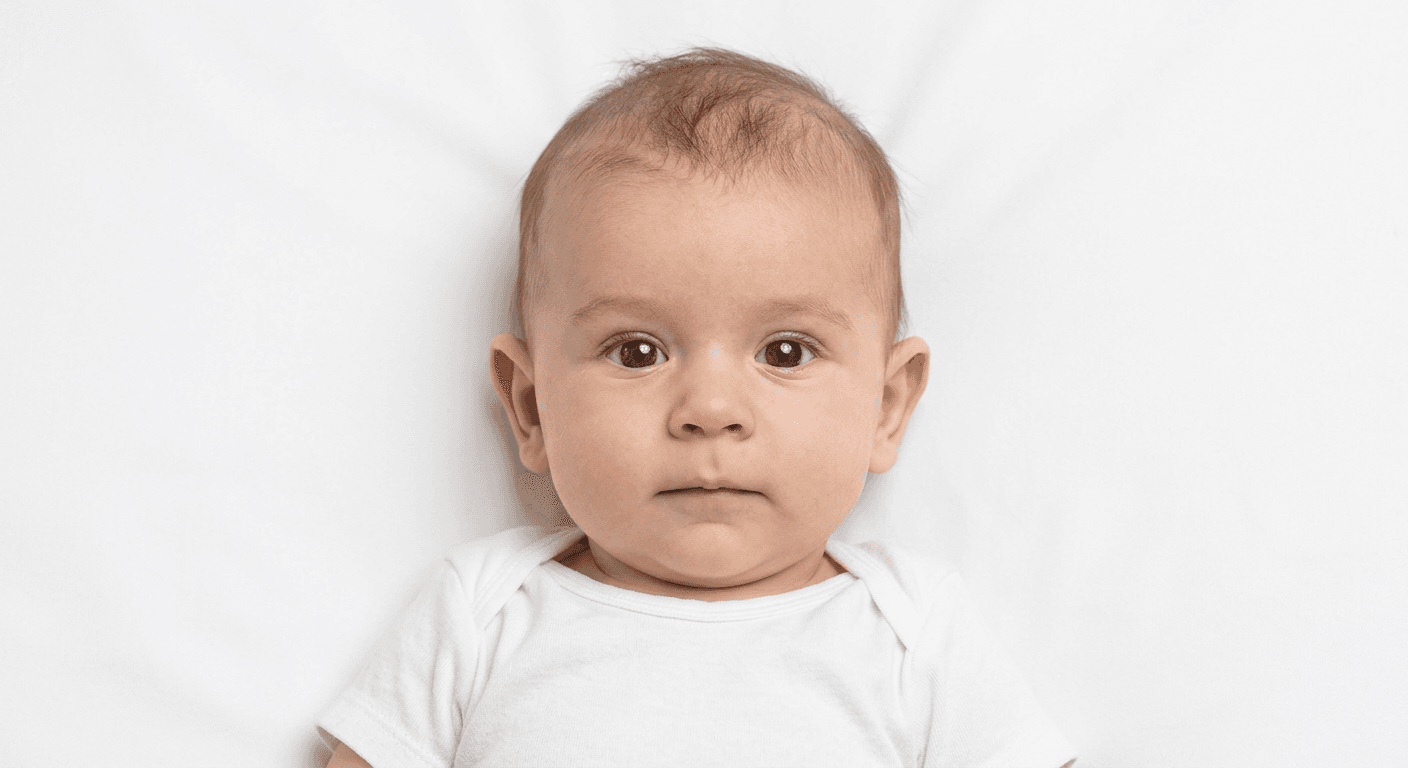
A parent opens an envelope from the consulate expecting a travel document, only to find a rejection letter stating the infant's chin-to-crown measurement is two millimeters off. Applying for a spanish passport from abroad, or handling the bureaucracy of any dual citizenship, often stalls at the photographic evidence. The image validation software used by border authorities does not register that the subject is a three-week-old baby; it registers an asymmetrical facial map, a shadow cast across an ear, or insufficient background contrast. Fixing this requires understanding how consular scanning systems measure biometric geometry, rather than just pointing a camera and hoping for leniency.
Quick Summary
Infant biometric photos fail because automated consular software evaluates babies using adult geometrical standards, rejecting images for minor background shadows or facial asymmetries.
- European consulates mandate strict head-to-image proportions, typically demanding the face occupies 70-80% of a 35x45mm frame.
- Background hues must provide high delta contrast to separate the subject's hairline from the backdrop.
- Physical photo booths create localized flash shadows that automated systems flag as facial deformations.
- Image compression through messaging apps degrades the pixel density required for biometric chip encoding.
Table of Contents
- Why Infant Biometrics Fail at the Consulate
- Background Colors Cause More Rejections Than Proportions
- Dual Citizenship Filings Hide a Dimension Trap
- Digital Verification Systems Measure Contrast Over Resolution
- What to Prioritize When Filing Multiple Nationalities
- Who Should Avoid Automated Photo Kiosks Entirely
Why Infant Biometrics Fail at the Consulate
The standard protocol for international travel documents, outlined by ICAO Document 9303, includes a leniency clause for infants under one year of age. This clause theoretically permits closed eyes, a lack of direct eye contact, or a slightly open mouth. However, a major disconnect exists between theoretical standards and actual consular ingestion software. When a physical or digital image enters the consular system, it is processed by an initial layer of automated biometric mapping before a human clerk ever reviews it.
This software lays a geometric grid over the face, seeking exactly 80 nodal points. It measures the distance between the pupils, the width of the nose, and the span from the lower lip to the chin. When parents photograph an infant lying flat on a mattress, gravity pulls the facial tissue backward. The ears flatten against the surface and push forward into the camera's lens view, artificially widening the biometric map of the face. The software flags this as a physical distortion, triggering an automatic rejection.
The most reliable way to bypass this failure mode is to photograph the child in a seated incline, roughly 45 degrees, supporting the neck invisibly beneath their clothing. This allows gravity to pull the facial features downward naturally, matching the vertical geometry the algorithm expects from a standing adult. You can test this yourself before submission: if you draw a straight horizontal line between the center of the infant's eyes, the tips of the ears should fall below that axis. If the ears sit higher, the head is tilted back too far, and the ingestion software will reject the file.
Background Colors Cause More Rejections Than Proportions
Biometric extraction algorithms rely on a concept called Delta E, which measures the difference between two colors. To successfully isolate a face, the software needs a high Delta E value between the edge of the subject's skin or hair and the surrounding background. While parents obsess over framing and facial expressions, they frequently overlook the specific background hue required by the issuing authority.
Spain, for example, demands a pure white background. Submitting a photo with an off-white or light grey backdrop causes the software to struggle with edge detection, especially for infants with light-colored or sparse hair. Conversely, when expatriate parents in Germany apply for a Polish document - often referred to locally in municipal offices as a polnische reisepass - they face different constraints. Polish authorities accept white or light backgrounds but heavily scrutinize background shadows. If a baby is laid on a white blanket, the folds in the fabric create dark gray micro-shadows. The algorithm reads these shadows as structural noise and fails to extract a clean silhouette.
Practical rule: Never place an infant directly against the background surface. Putting 10 to 15 centimeters of distance between the back of the child's head and the backdrop allows light to fill the gap, eliminating the drop-shadow that triggers software rejections.
Dual Citizenship Filings Hide a Dimension Trap
Families navigating dual citizenship often attempt to use a single photographic file for both nations. This approach fails when parents confuse physical print dimensions with internal facial scaling. Most of the European Union standardizes physical prints at 35x45 millimeters. However, the internal chin-to-crown measurement varies depending on the specific national mandate.
Germany mandates that the face must measure precisely between 32 and 36 millimeters from the bottom of the chin to the top of the skull, entirely excluding hair volume. Similarly, securing a kroatischer reisepass for a dual-citizen child involves hitting that exact same 32-36mm facial bracket, but with strict enforcement on a light grey background to contrast against the skin. If a parent sizes a photograph to meet a foreign 51x51mm standard and later crops that exact same digital file to fit a 35x45mm European application, the facial proportions shift violently.
Cropping an image inward alters the percentage of the canvas occupied by the face. A head that took up 50% of a square image might suddenly consume 90% of a rectangular crop, pushing the chin and hairline outside the acceptable biometric zone. Reviewing a Germany Baby Passport Photo Guide helps clarify the exact boundaries of these strict dimensional brackets. If the head size breaches the 36mm maximum, the passport chip cannot accurately encode the biometric markers because the outer edges of the face touch the safety margins of the print.
Digital Verification Systems Measure Contrast Over Resolution
A common misunderstanding among applicants is that a high-megapixel camera guarantees a compliant image. Consular verification systems care very little about overall resolution beyond the baseline of 300 DPI (dots per inch). What they actually measure is macro-block integrity and contrast variation across the pupil and iris.
Any standard biometric internationaler reisepass issued in the Schengen area encodes a facial map onto a secure RFID chip embedded in the document. To generate this map, the source photo must possess distinct boundaries between the iris and the sclera (the white of the eye). When parents take a compliant photo but transfer the file to a spouse via a standard messaging app like WhatsApp, the app automatically applies heavy lossy compression to save bandwidth. This compression groups similar pixels together into blocks.
The blocks blur the sharp lines of the baby's eyes, effectively reducing the contrast that the biometric scanner requires to register a human face. A file that looks perfectly sharp on a mobile phone screen will reveal heavy artifacting when magnified by the consulate's desktop software. To prevent this, always transfer the digital file via email as an attachment or use a cloud storage link, ensuring the original pixel data remains untouched prior to uploading it to the government portal or printing it at a terminal.
What to Prioritize When Filing Multiple Nationalities
When a single photo must serve multiple administrative systems, balancing the conflicting requirements becomes a mathematical exercise. You cannot satisfy every parameter simultaneously without making calculated compromises on the initial capture.
| Issuing Country | Background Hue | Face Proportion | Infant Leniency Enforcement |
|---|---|---|---|
| Spain | Pure White | 70-80% of image | Moderate (allows closed eyes under 6 mos) |
| Germany | Light Grey | 32-36mm head height | Strict (requires open eyes, no pacifiers) |
| Poland | White / Light | 70-80% of image | Moderate (allows neutral expression deviation) |
| Croatia | Light Grey / White | 32-36mm head height | Strict (demands exact centered alignment) |
If you must shoot one image to crop for different countries, prioritize the lighting and background over the immediate crop. Shoot on a pure white, well-lit background, leaving massive amounts of negative space around the child's head and shoulders. By capturing a wide frame, you give yourself the digital canvas necessary to scale the face up or down to hit the 32-36mm German requirement or the 70-80% Spanish requirement later.
Practical rule: Shoot wider than you think is necessary. You can always crop dead space out of a high-resolution file to increase the facial percentage, but you can never reconstruct shoulders and backgrounds that were framed out of the original shot.
Who Should Avoid Automated Photo Kiosks Entirely
Standardized photo booths found in train stations and post offices are engineered for adult physiology. Their fixed focal lengths (typically equivalent to a 50mm lens) and static flash placements make them structurally unsuited for infant photography, and attempting to use them usually guarantees an application rejection.
The primary failure point is the flash trajectory. A booth's strobe is positioned to hit a standing adult directly in the face, flattening the lighting and illuminating both ears evenly. When a parent holds an infant up to the lens, or rests an infant carrier on the booth's stool, the baby sits far below the intended target angle. The flash fires downward across the child's face, creating a heavy shadow under the nose and a distinct black line under the chin. The automated biometric system interprets this hard shadow line as an adult beard or a severe jaw deformation, instantly voiding the image.
Furthermore, the physical confinement of a booth forces parents to hold the child's head from behind. Even if the hands are hidden, the pressure on the back of the baby's skull pushes the neck forward, altering the inter-pupillary distance registered by the camera. For infants under twelve months, controlling the environment at home with diffuse natural light facing a window yields a much higher technical success rate. Checking comprehensive EU & International Baby Passport Photo Requirements & Guides allows parents to confirm the precise lighting and framing rules before they ever open the camera application.
FAQ
Can an infant's mouth be open in a European passport photo? Yes, but only slightly. While ICAO standards offer leniency for infants under one year, a widely open mouth that distorts the geometry of the cheeks or obscures the jawline will trigger a rejection from automated scanning software.
Does a baby need to look directly at the camera? Technically, minor deviations are permitted for newborns. However, the face must be positioned squarely toward the lens so that both edges of the face and both ears are equally visible to the biometric scanner.
Why was my photo rejected for 'uneven lighting' when it looked bright enough? Brightness is not the same as evenness. If one side of the face is brightly lit by a window and the other is in shadow, the software cannot accurately measure the distance between facial landmarks, resulting in an immediate failure.
Can I remove the background shadows using photo editing software? Manual editing of the subject's face, skin, or immediate physical outline is strictly prohibited and easily detected by forensic algorithms. You may only use automated tools designed specifically to replace the background layer without altering the biometric data of the subject.