Evaluating 7 Strongest Documents on the 2026 Global Passport Index
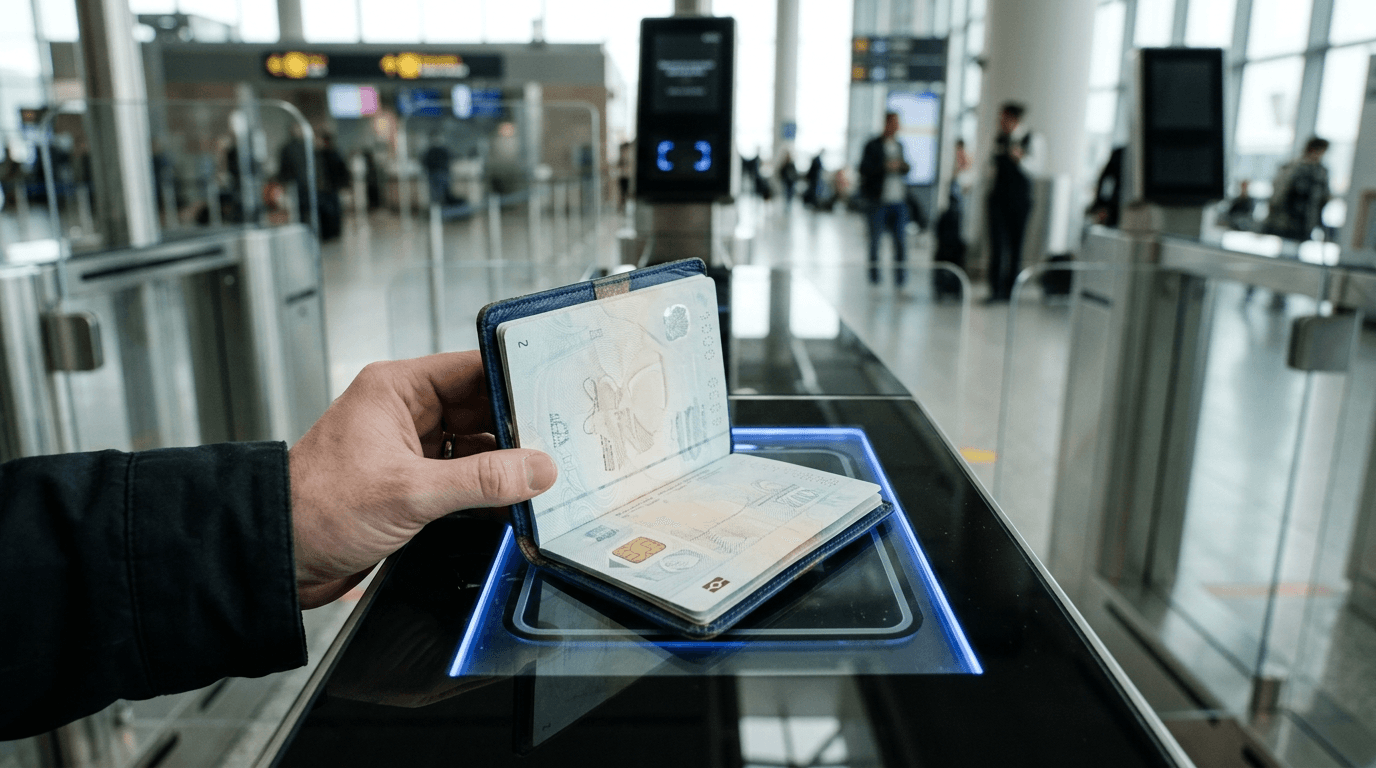
A traveler’s experience at an international border ultimately comes down to data parsing speed and bilateral agreements. When a border agent scans a travel document, they do not just read a name; they query a database that instantly weighs the diplomatic standing of the document against local immigration laws. Consulting a reliable passport index reveals that a tier-one document bypasses 190 or more consular queues, replacing weeks of visa paperwork with a ten-second automated gate scan. This disparity dictates corporate mobility, expatriate taxation, and family travel logistics across the globe.
Quick Summary
The strongest global travel documents combine expansive visa-free access with advanced cryptographic security to minimize border friction. Top-tier documents rely on polycarbonate data pages and standardized facial geometry checks to clear travelers rapidly through automated terminal gates.
- Automated gates require strict ICAO biometric compliance.
- Bilateral trade agreements dictate visa-free entry corridors.
- Dual citizenship restrictions severely limit some top-tier options.
- Consular reciprocity penalizes heavily vetted issuing states.
Table of Contents
- What Dictates Automated Border Friction
- 1. Singapore
- 2. Germany
- 3. Japan
- 4. United Arab Emirates
- 5. United States
- 6. Australia
- 7. United Kingdom
- Where Operational Bottlenecks Dictate Your Choice
- FAQ
- Recommended Reads
What Dictates Automated Border Friction
We evaluate these documents not by diplomatic prestige, but by operational utility and cryptographic infrastructure. A biometric passport functions as a secure container for a contactless microchip, holding standardized facial dimensions, iris maps, and fingerprints. When assessing these options, the critical metric is how reliably the document bypasses manual human intervention. A document granting visa-on-arrival is inherently slower than one permitting direct e-gate entry, as physical queues introduce unpredictable delays and border guard discretion.

The items below are evaluated by their international mobility score, the sophistication of their embedded secure elements, and the strictness of their issuance protocols. Familiarizing yourself with international passport photo requirements highlights how strictly different governments enforce these biometric enrollment standards to guarantee machine readability abroad.
| Document | Primary Advantage | Authentication Mechanism | Core Limitation |
|---|---|---|---|
| Singapore | Frictionless Asia access | ICAO-compliant RFID | No dual citizenship allowed |
| Germany | Unrestricted EU residency | Polycarbonate data page | High consular bureaucracy |
| Japan | Near-zero secondary screening | Advanced laser engraving | Restrictive naturalization |
| UAE | Extensive bilateral waivers | Multi-point iris mapping | Birthright limitations |
| United States | Vast consular network | 51x51mm digital capture | Taxation on global income |
| Australia | APAC regional dominance | Active authentication chip | High issuance costs |
| United Kingdom | Commonwealth integration | High-contrast watermarks | 90/180 day Schengen limit |
1. Singapore
The Singaporean document serves individuals operating heavily across Asian and Western financial hubs, providing visa-free access to nearly every major global economy.
The travel document relies on a high-density microchip. It holds encrypted facial maps and multi-finger biometrics. At the point of issuance, the government enforces stringent geometric thresholds for the physical photograph. This dictates how successfully the final product interacts with automated border control gates. A precise initial capture ensures the resulting chip passport clears e-gates without fallback to manual inspection. For families securing these credentials, adhering to strict Singapore baby passport photo guidelines is non-negotiable. Optical character recognition systems instantly reject distorted digital data.
Algorithmic Clearance Outpaces Rival Hubs
The document’s operational power stems from the city-state's strictly neutral diplomatic stance, resulting in frictionless reciprocal access across otherwise highly restrictive borders like China and the United States.
The absolute prohibition on dual citizenship forces naturalized citizens to permanently renounce their original nationality. It does not suit individuals seeking to hold multiple geopolitical safety nets for tax or estate planning purposes.
2. Germany
The German travel document anchors European mobility, serving expatriate families and corporate workers requiring seamless transit through the Schengen Area.
German authorities issue documents with highly complex polycarbonate data pages. The embedded secure element requires exact compliance with biometric standards, specifically the 35x45mm sizing and rigid facial expression controls. These physical data points are digitized, hashed, and signed by the issuing country passport authority's private key. Foreign border terminals authenticate this digital signature using a public key infrastructure. Meeting these enrollment parameters, including those detailed in German documentation standards, dictates the document's reliability when crossing international terminals.
Unmatched Schengen Baseline Limits Expansion
The document secures unlimited residency and working rights across 27 EU member states, providing a geographic baseline that vastly outstrips stand-alone nations.
The highly bureaucratic renewal process often requires in-person consular appointments backlogged for months. Expats living in jurisdictions far from a designated consulate face high operational friction simply maintaining valid credentials.
3. Japan
This document serves corporate travelers who demand rapid access to almost every global jurisdiction without enduring pre-departure visa applications.
Japanese authorities utilize advanced laser engraving on the data page alongside a robust contactless integrated circuit. The biometric data collection captures exact facial dimensions and iris patterns. Because the domestic infrastructure relies heavily on automated verification, the physical passport id must align perfectly with the centralized digitized record. This alignment ensures foreign border agents rarely need to manually inspect the physical booklet, relying entirely on cryptographic terminal handshakes.
Maximum Global Trust Limits Consular Scrutiny
Japanese citizens face the lowest rate of secondary screening at foreign borders, as consular networks globally trust the rigorous domestic vetting process.
Japan operates one of the strictest naturalization pipelines in the developed world. It requires extensive continuous residency, high language proficiency, and the renunciation of all other citizenships, placing it entirely out of reach for citizenship-by-investment seekers.
4. United Arab Emirates
The UAE document caters to Emirati nationals prioritizing rapid business expansion across Europe and the Americas without the friction of traditional visa queues.
The physical booklet uses state-of-the-art intaglio printing. It includes a highly secure RFID inlay. Data enrollment requires precise digital imaging to match the local Smart Gate infrastructure. These gates actively use iris and facial recognition simultaneously. Unlike legacy systems, the UAE infrastructure continuously updates the biometric profile of frequent travelers. Each successful crossing increases terminal clearance speed.
Rapid Bilateral Expansion Breaks Regional Norms
By systematically signing reciprocal visa-waiver agreements over the past decade, the UAE transitioned from a regionally restricted document to a globally dominant one.
The extreme disparity between naturalized citizens and native Emiratis means the full diplomatic weight of the document is heavily restricted. The naturalization laws favor bloodline descent, offering only limited, highly regulated pathways for exceptional foreign investors, leaving most long-term residents excluded.
Practical rule: Never travel with a document expiring within six months. Regardless of the issuing state's diplomatic power, airline boarding software automatically flags and rejects passengers whose validity falls below this threshold.
5. United States
The US travel document supports one of the world's largest traveling populations, facilitating extensive mobility for its native and naturalized citizens.
The infrastructure relies on rigorous initial data capture, explicitly enforcing the 51x51mm photograph standard and a uniform white background. The embedded microchip stores a high-resolution digital image of the holder and essential biographical data. Families navigating this process, particularly those following US biometric image requirements, find that minor shadows or incorrect head sizing immediately trigger application rejections. At the border, the cryptographic signature proves the data has not been altered since the State Department issued it.
Diplomatic Friction Creates Reciprocal Hurdles
While historically powerful, the US document faces retaliatory electronic authorization requirements from nations objecting to stringent American entry policies.
The US strictly enforces citizenship-based taxation. Holders must file tax returns with the IRS regardless of their global residency or income source. This unique requirement frequently offsets the mobility benefits for expatriates building wealth in foreign jurisdictions.
6. Australia
The Australian document suits residents prioritizing high-security transit across the Asia-Pacific region and the Commonwealth.
Australian authorities issue the "R Series" document, featuring a high-security polycarbonate data page that makes physical tampering nearly impossible. The enrollment process mandates some of the strictest facial recognition baselines globally. The digital portrait must pass proprietary algorithms before printing, meaning applicants must ensure perfect compliance with Australian document photo standards. The document’s internal chip utilizes Active Authentication, actively responding to border terminal queries rather than merely broadcasting static data.
High Biometric Thresholds Secure The Border
Because the domestic infrastructure relies heavily on automated SmartGates, the physical document is engineered to prioritize machine readability over visual inspection.
It ranks among the most expensive travel documents in the world to acquire and renew. The government phased out the larger frequent traveler booklet, forcing highly mobile individuals to pay full price for entirely new credentials much sooner when pages fill up.
7. United Kingdom
The UK document serves British nationals requiring sustained global access, leaning heavily on historical Commonwealth ties following its departure from the European Union.
The current blue booklet integrates complex watermarks, a laser-perforated data page, and an advanced secure element. Enrollment demands precise digital verification, where the initial photograph is instantly mapped against ICAO standards for eye spacing and background contrast. Strict adherence to United Kingdom applicant guidelines ensures the facial map accurately translates to the e-passport gate systems deployed across major international hubs.
Post-Brexit Realignment Shifts Non-EU Reliance
The document retains tier-one status globally but has fundamentally altered how its holders navigate continental Europe.
The loss of freedom of movement means holders are now bound by the Schengen 90/180-day rule. It no longer suits individuals who need to spend uninterrupted, long-term periods in European Union countries without securing specific national work or residency visas.
Practical rule: Always carry a secondary form of physical identification when relying on e-gates abroad. If the terminal fails to read the embedded chip due to physical damage, border agents will demand supporting documentation before manually overriding the rejection.
Where Operational Bottlenecks Dictate Your Choice
Selecting the right mobility strategy depends entirely on your specific travel and taxation bottlenecks. If your primary obstacle is friction within Asian financial corridors, holding a Singapore or Japan document removes nearly all consular delays. Conversely, if your bottleneck is European residency and uninhibited continental transit, a German credential remains the optimal solution despite the bureaucratic renewal process. Individuals prioritizing Commonwealth access and robust consular support in remote jurisdictions should lean on an Australian or UK document, accepting the respective financial cost and Schengen limitations. Do not pursue the US document if your tax strategy relies heavily on territorial taxation, as the IRS reporting requirements apply universally.
FAQ
What causes an automated border gate to reject a document? Rejections occur when the physical photograph lacks the necessary contrast or resolution for optical character recognition, or when the chip's cryptographic signature fails to authenticate with the terminal due to physical damage to the inlay.
How often are global mobility rankings updated? Major indexes update quarterly to reflect newly signed bilateral trade agreements, visa-waiver program adjustments, and shifts in diplomatic reciprocity.
Does a strong travel document guarantee entry? No. A tier-one document waives the pre-departure visa requirement, but border guards retain absolute authority to deny entry based on return intent, criminal history, or insufficient funds.
Why do biometric enrollment standards differ by country? Different nations deploy varying border control hardware. Countries utilizing advanced multi-point facial recognition require higher DPI, specific lighting constraints, and stricter physical dimensions during the initial application process to ensure system compatibility.