German Passport Renewal: Requirements to Reisepass Verlängern
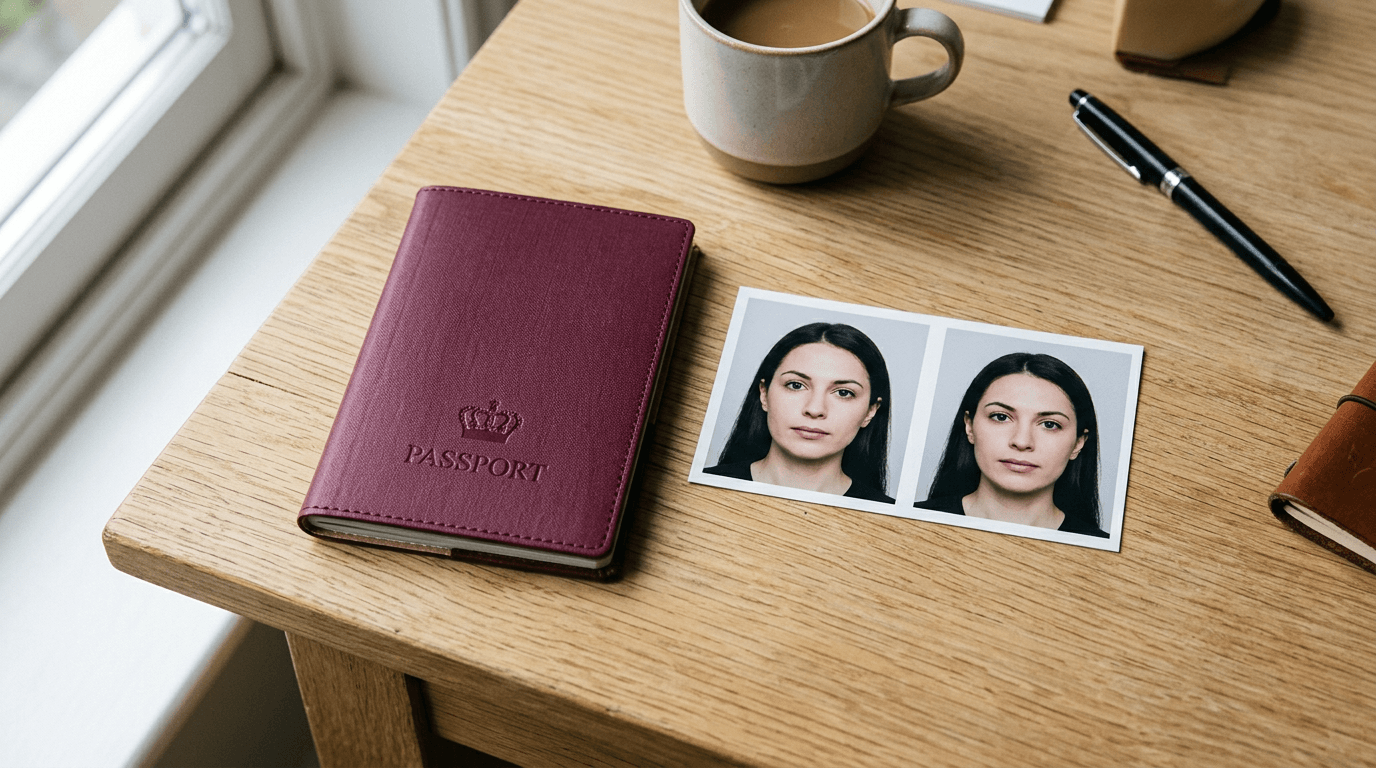
Many applicants arrive at their local citizens' office expecting a simple stamp that extends their travel document's validity. In reality, attempting to Reisepass verlängern (extend a passport) is legally and technically impossible for German citizens today. The physical booklet houses a cryptographic chip locked at the time of manufacture; the expiration date encoded inside it cannot be rewritten or updated. Instead of a direct extension, the German administrative system requires you to apply for an entirely new biometric document. This guide breaks down the exact mechanics of that replacement process, the strict biometric standards that cause the highest rejection rates, and the administrative hurdles you must clear to secure your travel documents on time without jeopardizing your upcoming travel plans.
Quick Summary
Replacing a German passport requires an in-person appointment to submit fresh biometric data, as direct validity extensions are no longer permitted under German law. The process involves centralized manufacturing in Berlin, making early preparation essential for international travelers.
- Direct passport extensions do not exist; you must apply for a completely new document.
- Standard processing takes four to six weeks, with a three-day express option available for a premium.
- Biometric photo compliance is the leading cause of application rejection.
- Minors require physical consent documents from all custodial parents at the time of submission.
Table of Contents
- 1. Document Eligibility
- 2. Appointment Scheduling
- 3. Biometric Photo Requirements
- 4. Application Submission
- 5. Processing Timelines
- 6. Passport Collection
- Common Pitfalls & Troubleshooting
- FAQ
- Recommended Reads
1. Document Eligibility

Why a Direct Extension is Legally Impossible
The concept of a Verlängerung Reisepass (passport extension) is a relic of older administrative frameworks. Under current German passport law (Passgesetz), every travel document issued to a citizen must contain an unalterable cryptographic chip adhering to International Civil Aviation Organization (ICAO) standards. This chip stores your facial geometry and two fingerprints. Because the chip is digitally signed and permanently locked by the Federal Printing Office (Bundesdruckerei) to prevent tampering, the expiration date written into its memory cannot be extended by a local clerk.
Historically, children's passports (Kinderreisepass) were the only documents that could be extended or updated with new photos. However, Germany abolished the Kinderreisepass entirely on January 1, 2024. Today, every citizen from birth requires a standard biometric passport. Documents issued to applicants under the age of 24 are valid for exactly six years, while passports for applicants aged 24 and older remain valid for ten years.
Because you are applying for a Reisepass neu (new passport), you will be issued an entirely new nine-character alphanumeric passport number. The most common mistake travelers make at this stage is booking non-refundable international flights using their expiring passport number, assuming the number will remain the same after renewal. Airline systems will flag the mismatch during check-in. Always wait until you have the new document in hand before entering passport details into an international flight manifest or visa application.
2. Appointment Scheduling
Where the Appointment Bottleneck Happens
The most significant delay in replacing your passport occurs before you even submit your paperwork. You must book an in-person appointment at your local citizens' office (Bürgeramt). In major metropolitan areas like Berlin, Munich, and Frankfurt, standard appointment slots are routinely booked out for six to eight weeks in advance.
The municipal booking systems operate on a rolling release schedule. While the calendar may appear completely full, municipal software automatically returns canceled appointments to the public pool every morning. The mechanism to bypass the two-month wait is to log into your city's digital booking portal exactly between 7:00 AM and 8:00 AM local time on a weekday. During this hour, same-day and next-day slots reliably appear as the system clears out overnight cancellations.
You are legally required to apply at the Bürgeramt located in the municipality where you hold your primary residence (Hauptwohnsitz). If you attempt to apply in a different city, the local office is deemed "unzuständig" (lacking jurisdiction). While they can technically process the application, doing so triggers two severe penalties: the processing fee automatically doubles, and the clerk must request formal authorization from your home municipality, adding several days to your timeline. Ensure you book a slot specifically categorized for "Passangelegenheiten" (passport matters); booking a generic registration slot will result in the clerk turning you away, as the allocated time is too short for biometric capture.
3. Biometric Photo Requirements
How Strict Biometric Checks Break Applications
The single most common point of failure in the entire replacement process is the photograph. The Bundesdruckerei enforces a rigid biometric template (Biometrieschablone) that leaves no room for artistic interpretation. The physical print must measure exactly 35 by 45 millimeters. Within that frame, the applicant's face must measure between 32 and 36 millimeters from the bottom of the chin to the crown of the head. The background must be a textureless, light grey, and the lighting must not cast any shadows on the face or the background.
For adult applicants, automated photo booths located inside train stations or the Bürgeramt itself usually suffice. For infants and toddlers, however, these booths are entirely useless, as they require the subject to sit unsupported on a stool. Because even newborns must meet these exact biometric standards, parents face a significant logistical hurdle. Taking a compliant photo of a baby requires laying them on a flat surface and controlling the ambient lighting perfectly.
Many parents use a dedicated Germany baby passport photo guide to understand the exact framing requirements before attempting to capture the image at home. Once captured, specialized software is required to crop the image to the exact millimeter specifications and replace distracting backgrounds with the mandated flat grey. Utilizing a dedicated EU baby passport photo maker ensures the file output aligns perfectly with the Bundesdruckerei's digital scanning algorithms.
Practical rule: Never attempt to manually erase a background using generic photo editing software; government optical scanners are trained to detect artificial edge blurring and will instantly flag the physical print as digitally manipulated, resulting in immediate rejection.
To mitigate the financial risk of purchasing prints that fail the clerk's scan, always ensure your processing method includes a 100% refund policy tied explicitly to government acceptance.
4. Application Submission
What Happens at the Submission Desk
The in-person appointment is purely an administrative data-capture session. You must bring your current, expiring passport or your national ID card (Personalausweis), the biometric photograph, and the application fee, which is typically paid via Girocard at the desk.
The Ausstellung Reisepass (passport issuance) begins with the clerk scanning your physical photograph into the federal system. If the software accepts the biometrics, the clerk will use an optical scanner to capture your fingerprints. The standard procedure captures the right index finger followed by the left index finger; if either is injured or unreadable, the middle fingers are used. Finally, you will provide a digital signature on a capture pad.
The mechanics differ significantly for minors. Fingerprints are only collected from children aged six and older, and signatures are only required from age ten. However, the authorization requirements are stringent. If parents share joint custody, both must consent to the passport application. If only one parent attends the appointment, they must present a physically signed consent form from the absent parent, alongside the absent parent's original, physical ID card or passport.
The mistake applicants repeatedly make here is bringing a photocopy or a smartphone picture of the absent parent's ID. German federal guidelines prohibit clerks from accepting copies for identity verification. Without the original physical document, the application will be halted immediately.
5. Processing Timelines
When the Express Route Becomes Mandatory
Local municipal offices do not manufacture passports. Once your biometric data is captured, it is transmitted via a secure network to the Bundesdruckerei in Berlin. The standard production and return shipping cycle takes between four and six weeks. During peak travel seasons (May through July), this timeline frequently stretches to eight weeks.
If your travel date falls within that window, you must utilize the Express-Reisepass option. For an additional surcharge, your data is prioritized in the Berlin manufacturing queue. If the Bürgeramt transmits your application before 11:00 AM, the Bundesdruckerei guarantees delivery of the finished passport back to the local office within three to four working days.
If you have a flight departing in less than three days, your only remaining option is the temporary passport (vorläufiger Reisepass). This is a green booklet manufactured and issued on the spot by the local clerk. It lacks a cryptographic chip and is valid for a maximum of one year. The critical limitation of the temporary passport is its international acceptance. Because it lacks a biometric chip, it explicitly disqualifies you from the United States Visa Waiver Program (ESTA). Attempting to board a US-bound flight with a green temporary German passport without a pre-approved, physically stamped visa will result in immediate denied boarding.
6. Passport Collection
Who Can Execute the Final Collection
The final step in the replacement cycle is Reisepass abholen (passport collection). You generally do not need to book a standard appointment for collection. Most citizens' offices operate a dedicated quick-service desk for document retrieval, and many modern facilities now feature automated document terminals (Dokumentenausgabebox). These function identically to parcel lockers: you scan the barcode from your collection receipt or enter a PIN sent via SMS, and a secure drawer opens containing your new document.
Whether you collect it from a clerk or a machine, you must present your old passport. The government requires the old document to be formally invalidated (entwertet) before the new one is handed over. A clerk will physically punch holes through the data page and the cover.
If your old passport contains valid, unexpired visas for countries like the United States, China, or Russia, you must proactively manage the invalidation process. You are allowed to travel with a new passport and an invalidated old passport containing a valid visa, but only if the visa page itself is undamaged. Before handing the old booklet to the clerk, place sticky notes over the pages containing active visas and explicitly instruct the clerk to only punch the primary ID page. If a hole punch clips the edge of a foreign visa, the visa is destroyed permanently.
If you cannot collect the document yourself, you must issue a specific collection power of attorney (Abholvollmacht). A standard, general power of attorney (Generalvollmacht) is frequently rejected at the collection desk. The authorized representative must bring the specific signed form, their own original ID, and your old passport.
Common Pitfalls & Troubleshooting
Even with careful preparation, applications frequently derail at the submission desk. Recognizing the symptoms of these failures allows you to apply the correct fix immediately.
Symptom: The municipal software rejects the photograph's contrast or dimensions.
Diagnosis: The physical print failed the automated biometric template overlay. This happens when home-printed photos lack the required 300 DPI resolution, or when retail photo booths fail to account for a subject's posture. Fix: You must provide a compliant photo before the appointment window closes. While many offices have self-service terminals in the waiting room, these are unusable for infants and toddlers. Your only recourse is to use a mobile biometric processing service to generate a compliant digital sheet on your smartphone, and immediately print it at a nearby drugstore's instant photo kiosk.
Symptom: The clerk refuses to process a minor's application due to missing custody proof.
Diagnosis: You are an unmarried parent applying for a child, or you are applying alone without the second custodial parent's original ID card. Fix: If you have sole custody, you must present a current certificate of sole custody (Negativbescheinigung) issued by the Youth Welfare Office (Jugendamt). If you share custody, you must reschedule the appointment and return with the physically signed consent form and the actual, original ID card of the absent parent. Digital copies or scans are never accepted.
Symptom: You receive a collection notice, but your upcoming flight requires your current passport number.
Diagnosis: You applied for the new passport, but you have immediate travel planned to a country requiring advance passenger information (API) matching the document you will carry. Fix: Do not collect the new passport yet. Your old passport remains legally valid until the exact moment the new one is handed to you and the old one is hole-punched. Complete your immediate travel using the old passport, and collect the new document upon your return to Germany.
FAQ
Can I keep my old German passport after the new one is issued?
Yes. Once the clerk physically invalidates the old passport by punching holes through the cover and data page, it is returned to you. This is crucial for travelers who need to retain access to unexpired foreign visas stamped on the inner pages.
Do infants and toddlers need to provide fingerprints?
No. The German government only mandates fingerprint collection for children starting at age six. Furthermore, children are not required to provide a digital signature until they reach age ten. Only the biometric photograph is required for infants.
How much does a standard German passport cost?
As of recent fee updates, a standard 32-page biometric passport costs €70.00 for applicants aged 24 and older. For applicants under 24, the subsidized fee is €37.50. Requesting the 48-page version for frequent travelers or the Express processing option incurs additional surcharges.
What happens if I lose my passport while traveling abroad?
You cannot apply for a standard replacement while on a short trip abroad. You must report the loss to the local police and visit the nearest German embassy or consulate. They will issue a temporary emergency travel document (Reiseausweis als Passersatz) strictly designed to allow you to re-enter Germany.