Global Standards for a Passport Format Photo in 2026
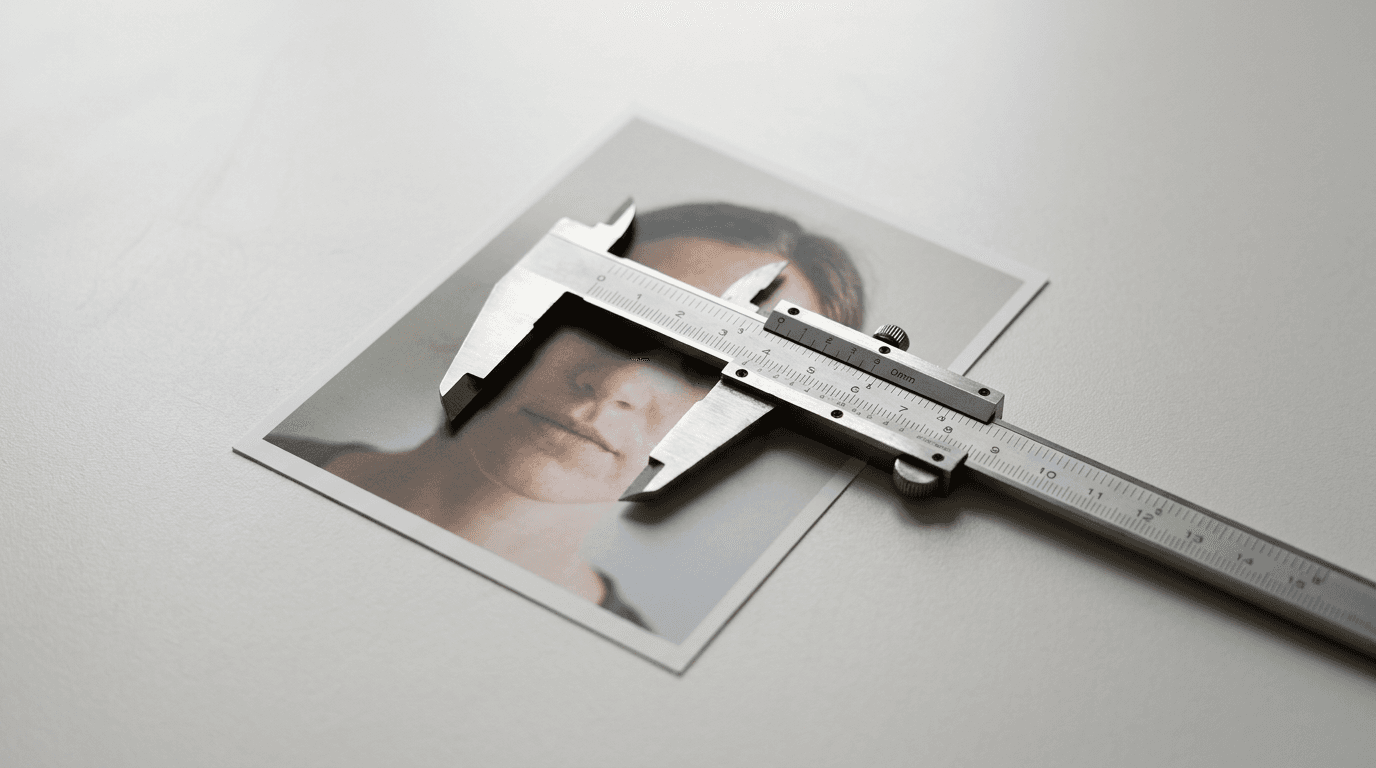
A common misconception is that standardizing on a white background and a neutral expression guarantees border agency approval. In reality, an identification picture that passes the Schengen zone algorithms in Berlin will frequently be rejected by the United States State Department before a human agent ever reviews the file. The difference lies entirely in millimeter-level spatial tolerances, head proportion ratios, and background density metrics defined by each issuing nation's automated processing software. A single millimeter of spatial deviation dictates whether an application proceeds to printing or bounces back with a failure notice.
Quick Summary
A compliant biometric identification image requires precise physical dimensions, facial proportion scaling, and background uniformity dictated by the issuing nation's scanning systems.
- European guidelines default to a 35x45 mm physical crop, whereas the United States enforces a rigid 2x2 inch (51x51 mm) standard.
- Facial proportion limits matter more than outer dimensions; the chin-to-crown vertical axis must occupy a specific percentage of the total height.
- Automated edge-detection algorithms reject slight background gradients, shadows, or off-white tones that fail to isolate the subject's hair.
- Digital submission portals enforce minimum pixel constraints, strict aspect ratios, and precise dots-per-inch (DPI) minimums before a file can be uploaded.
Table of Contents
- Why the Passport Format Photo Is Never Universal
- How Biometric Scanners Measure the Human Face
- Where Outer Frame Dimensions Distort Facial Scaling
- When Background Density Fails Edge Detection
- Why Minor Pitch and Yaw Invalidate the Crop
- What Digital Portals Reveal About Pixel Ratios
- Comparison Table: Global Ratios and Tolerances
- FAQ
- Recommended Reads
Why the Passport Format Photo Is Never Universal
A rejected identity document application rarely happens because the subject blinked. It happens because the automated processing system scanning the passport format photo flags a spatial variance that falls outside encoded legal parameters. Biometric verification relies on fixed digital templates that map facial landmarks across a grid. Every border agency operates a distinct extraction engine with proprietary thresholds, meaning an image scaled correctly for a European border checkpoint will instantly trigger an alignment failure at a foreign consulate.
The lens through which an applicant must view this process is mechanical constraint rather than visual aesthetics. Systems do not evaluate whether a picture looks clear to the human eye; they measure whether the distance between the pupils satisfies a mathematical equation relative to the total width of the paper. This structural separation dictates that what works for a Schengen visa will completely fail a North American system, necessitating a precise understanding of how physical area, facial mass, and background illumination interact. Understanding the logic behind these failure states prevents weeks of processing delays.
How Biometric Scanners Measure the Human Face
Border control relies on guidelines published by the International Civil Aviation Organization (ICAO), specifically Document 9303, which standardizes machine-readable travel documents. However, individual nations implement these standards with varying degrees of severity. When a physical or digital photograph enters the verification system, the software instantly plots a biometric triangle connecting the pupils and the center of the mouth. The algorithm then draws a vertical axis from the absolute bottom of the chin to the top of the crown, ignoring hair volume.
If the face is printed too small within the frame, the optical scanner lacks the resolution required to measure the distance between the pupils accurately. If the face is printed too large, the bounding box cuts off the crown or the chin, disabling the vertical axis measurement entirely. This is why you cannot simply take a standard portrait and resize it arbitrarily. Securing compliance requires locking the facial proportions first, then calculating the outer crop based on the remainder of the required space. This principle is heavily enforced in European biometric systems, which demand high precision for facial scaling. For instance, specific structural tolerances govern applications like a Germany baby passport photo guide, where the head must occupy exactly 70 to 80 percent of the vertical space despite the subject's age.
Practical rule: Never crop a portrait so the chin rests directly on the bottom boundary. Always leave a minimum of 5 millimeters of the upper torso visible beneath the chin to allow the scanning algorithm to establish a clean base axis.
Where Outer Frame Dimensions Distort Facial Scaling
The most pervasive failure mode in application processing occurs when an applicant forces an image compliant with one nation's outer dimensions into the physical frame required by another. The two dominant international architectures are the European 35x45 millimeter rectangle and the North American 2x2 inch square. They are mathematically incompatible without altering the scale of the subject inside them.
Consider the mechanics of the 2x2 inch (51x51 millimeter) format. The required head height ranges from 25 to 35 millimeters. If an applicant takes a 35x45 millimeter European file and merely pads the edges with extra white space to create a 2x2 inch square, the resulting passport picture size is technically correct on the outside, but the internal head measurement shrinks well below the 25-millimeter threshold. The US State Department algorithms will reject it instantly for being too small. Conversely, cropping a 51x51 millimeter image down to 35x45 millimeters shears off the edges of the subject's hair and shoulders, pushing the facial mass above the 80 percent European maximum limit. Understanding the rigid geometry demanded by different nations is critical. For example, conforming to the United States baby passport photo guide requires respecting a massive square frame that treats the physical volume of the head entirely differently than rectangular formats.
When Background Density Fails Edge Detection
A background is not merely a blank space behind the subject; it is a contrasting calibration tool that allows edge-detection algorithms to separate the subject's hair, ears, and neck from the environment. When the background is unevenly lit, the extraction tool misinterprets shadows as physical extensions of the subject's head, instantly invalidating the biometric width measurement.

The specific hex color and density of the background vary wildly by jurisdiction, creating a dangerous trap for applicants who assume pure white is universally accepted. While the United States and the United Kingdom strictly mandate a stark white background devoid of texture, other global systems utilize optical scanners calibrated for light grey or light blue to prevent overexposure when scanning pale skin tones or blonde hair. Submitting a starkly white background to an agency that expects grey will cause the algorithm to flag the image as artificially altered or blown out. Adhering to regional lighting and density limits is a strict technical requirement, as detailed in the Canada baby passport photo guide, which mandates specific neutral tones and rejects absolute white to preserve edge contrast.
Why Minor Pitch and Yaw Invalidate the Crop
Automated systems operate in two-dimensional space, assuming the face is completely parallel to the camera sensor. When a subject tilts their head even slightly, it introduces pitch (tilting forward or backward), yaw (turning left or right), or roll (leaning toward a shoulder). These minute angular deviations completely distort the geometry required for approval.
When a subject leans backward - a very common occurrence with infants in car seats - the camera captures a severe upward pitch. In a two-dimensional photograph, this artificially shortens the vertical distance between the chin and the crown while exposing the underside of the jaw. When the software attempts to verify the passport image size constraints, it calculates a shortened vertical axis that fails the minimum height requirement, even if the outer dimensions are perfect. Similarly, a slight horizontal yaw shifts the nose off-center, violating the symmetry requirement and causing the biometric map to fail. The software does not attempt to correct these angles; it simply discards the file. Managing these physical angles requires a deep understanding of posing tolerances, which are strictly regulated across EU & International baby passport photo requirements & guides to ensure uniformity in machine-readable zones.
Practical rule: Ensure the subject's ears are equally visible and completely symmetrical. If one ear displays more surface area than the other, the subject has introduced horizontal yaw, and the extraction algorithm will reject the alignment.
What Digital Portals Reveal About Pixel Ratios
The transition to online application renewals has shifted the point of failure from physical scissors to digital compression algorithms. A physical photograph might look pristine, but its digital counterpart must survive strict validation checks regarding pixel density, aspect ratios, and JPEG artifact limits before the portal allows the upload to proceed.
Digital systems demand a high-resolution base, typically enforcing a strict 300 dots per inch (DPI) minimum. Furthermore, the aspect ratio of the pixel grid must exactly match the physical crop ratio. A 2x2 inch physical requirement translates to a 1:1 digital aspect ratio, often enforced as a rigid 600x600 minimum pixel count. If an applicant uploads a 600x600 image to a portal expecting a 35x45 millimeter ratio, the system will either stretch the face vertically to force the fit or reject the passport size file entirely. High compression rates save file space but introduce blurring around the eyes, which causes the biometric mapping to fail its sharpness test. Upload portals perform these checks instantly. For digital submissions routed through systems like the New Zealand baby passport photo guide, strict adherence to file size caps (often between 500KB and 5MB) and exact digital ratios is the only way to bypass the initial validation firewall.
Similarly, automated verification engines actively search for signs of digital manipulation. Software that incorrectly attempts to remove a background by blurring the edges will leave digital artifacts. Modern processing platforms like those used for the Singapore baby passport photo guide utilize algorithms specifically tuned to detect edge tampering, immediately invalidating applications if the background replacement alters the pixel structure of the subject's outline.
Comparison Table: Global Ratios and Tolerances
| Issuing Authority | Outer Dimensions | Head Height Requirement | Mandated Background |
|---|---|---|---|
| United States | 51x51 mm (2x2") | 25 to 35 mm (1 to 1 3/8") | Pure White |
| Schengen Area | 35x45 mm | 32 to 36 mm (70-80%) | Light Grey / Neutral |
| Canada | 50x70 mm | 31 to 36 mm | Pure White or Light Neutral |
| United Kingdom | 35x45 mm | 29 to 34 mm | Cream or Light Grey |
FAQ
Can I print multiple biometric images on a single standard photo sheet?
Yes, provided the digital file is correctly mapped. A standard 4x6 inch photographic sheet can comfortably house two 2x2 inch squares or up to four 35x45 millimeter rectangles without requiring any scaling that would disrupt the internal head proportions.
Does a digital upload require a specific resolution limit?
Yes. While physical prints are measured in millimeters, digital portals enforce pixel boundaries. Most systems demand a minimum of 600x600 pixels at 300 DPI for square formats, and typically reject files exceeding 5 to 10 megabytes to prevent server strain.
Why was my application rejected specifically for lighting if the room was bright?
Brightness does not equal uniformity. If a bright light source originates from one side of the room, it casts a shadow on the opposite side of the face or creates a gradient on the background. Scanners require flat, diffuse lighting that eliminates all directional shadows.
Are infant facial proportions judged by different algorithmic rules?
While the outer dimensions remain identical, many governments relax the internal head height percentage requirements for infants because their neck strength prevents standard vertical alignment. However, the background must still be completely free of parental hands, car seat straps, or textured blankets.