How to Take a Newborn Passport Photo at Home: Requirements and Tips
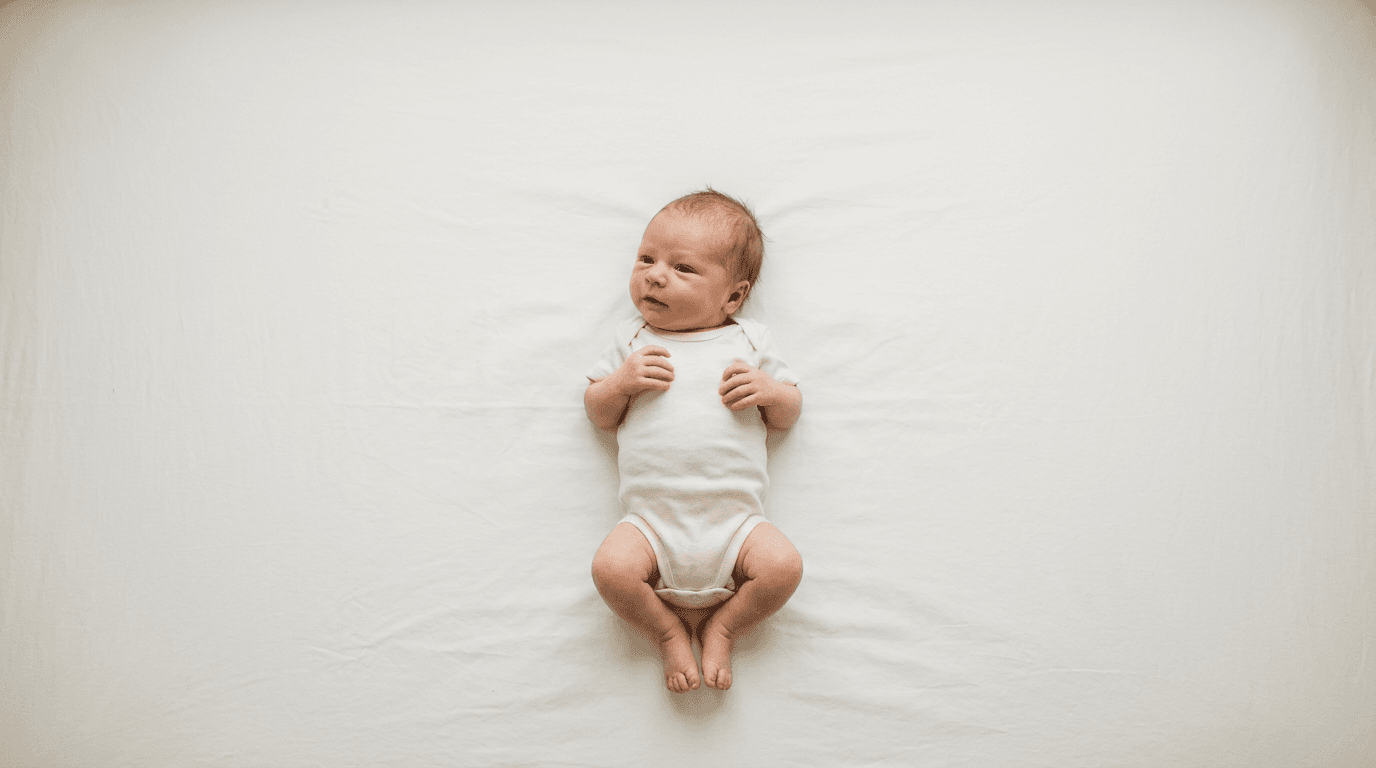
A newborn passport photo is the exact moment parents realize that government compliance does not care if their subject cannot hold their own head up, keep their eyes open, or stop wriggling. The rejection letters for these applications rarely point out that you are trying to photograph a three-week-old; they simply state that the background was not white enough or the eyes were not visible. Getting this right on the first attempt means understanding that biometric requirements are absolute, even for infants.
Quick Summary
Taking a compliant newborn passport photo requires controlling the lighting, background, and the infant's pose without visible support. The process involves laying the baby down rather than holding them up, managing shadows, and meeting strict biometric standards for the final crop.
- Lay the baby on a flat, plain background instead of trying to sit them up.
- Use natural, indirect light to avoid harsh shadows on the face.
- Ensure no hands or supportive objects are visible in the frame.
- Check specific country requirements for eye openness and head positioning.
- Use automated tools to correct the background and crop to exact dimensions.
Table of Contents
- Understanding Biometric Standards for Infants
- Preparing the Setup and Background
- Managing Lighting and Shadows
- Positioning the Newborn
- Capturing the Application Photo
- Formatting the Final Image
- Common Pitfalls & Troubleshooting
- FAQ
- Recommended Reads
Understanding Biometric Standards for Infants
Government passport authorities expect the same basic biometric markers from an infant as they do from an adult. The face must be clearly visible, the background must be neutral, and the lighting must be even. While some jurisdictions offer slight leniency for newborns - such as accepting closed eyes for babies under a certain age - the fundamental passport photo requirements remain rigid.
The mechanics of a biometric check rely on the distance between the eyes, the tip of the nose, and the chin. If these markers are obscured by a hand, a pacifier, or heavy shadow, the automated systems used by passport offices will flag the application photo for rejection.
Preparing the Setup and Background
The most common mistake when taking a newborn passport photo is trying to hold the baby upright against a wall. This invariably results in the parent's hands being visible or the baby's head slumping forward, creating shadows that hide the chin.

Instead, the setup must be horizontal. Place a plain white or light gray sheet on a firm surface, such as the floor or a firm mattress. Ensure the sheet is pulled taut to eliminate wrinkles, which cast shadows and alter the background color. The background must be entirely uniform; any patterns, textures, or secondary colors will cause a rejection. When processing the image, ensure that you meet the specific dimensions required by the destination country.
Managing Lighting and Shadows
Lighting is the single largest point of failure for home passport photography. Flash photography creates harsh, defined shadows under the chin and behind the head, and often causes red-eye. Overhead room lighting creates shadows in the eye sockets and under the nose.
The only reliable light source for an infant passport photo is indirect natural light. Position the baby parallel to a large window on an overcast day, or use a sheer curtain to diffuse direct sunlight. The light should hit the baby's face evenly from the top down, not from the side. If one side of the face is darker than the other, the biometric software cannot accurately map the facial features.
Practical rule: If you can see a distinct shadow cast by the baby's nose on their cheek, the lighting is too directional and the photo will likely be rejected.
Positioning the Newborn
Positioning a newborn requires patience and timing. The goal is to capture the baby with their head straight, looking generally toward the camera, without any visible support. Pacifiers, headbands, and hats must be removed.
Lay the baby on their back on the prepared sheet. If the baby's head rolls to one side, you can place tightly rolled towels under the sheet on either side of their head to keep it centered. The towels must be entirely hidden beneath the sheet and must not encroach on the outline of the baby's head or shoulders.
For jurisdictions with specific rules, such as the uk passport photo requirements, check if the baby's eyes must be open. If so, timing the photo after a nap and a feed is crucial. For newborns under a few weeks old, some countries (like the UK) will accept photos where the eyes are closed, but the face must still be completely visible and front-facing.
Capturing the Application Photo
Stand directly over the baby, ensuring your own body does not cast a shadow over them. The camera lens should be parallel to the baby's face. If you tilt the camera, the proportions of the face will be distorted, causing the chin-to-crown measurement to fail the biometric check.
Take multiple photos in quick succession. Babies move unpredictably, and capturing the exact moment they look toward the lens with a neutral expression requires volume. Do not zoom in too closely; leave plenty of space around the head and shoulders. This extra space is essential for the cropping process later.
Formatting the Final Image
An unedited photo straight from a smartphone will not meet government standards. The image must be cropped to the exact dimensions required by the specific country, and the background must often be digitally replaced with a pure white or light gray to ensure uniformity.
For example, if you are applying for a passport photo berlin style, the standard German biometric photo size is 35 x 45 mm, with the face taking up the vast majority of the vertical space. The UK has similar dimensions but slightly different rules regarding the background color (cream or light gray, never pure white). Using a dedicated processing tool ensures the chin-to-crown ratio is exact and the background meets the specific color requirements without triggering manipulation flags.
Common Pitfalls & Troubleshooting
The "Floating Head" Background Edit
- Symptom: The background is pure white, but the edges of the baby's head look jagged or unnaturally sharp.
- Diagnosis: Poor quality automatic background removal or manual erasing.
- Fix: Use a processing tool specifically designed for biometric photos that preserves the natural edge of the hair and shoulders. Government systems frequently reject photos that appear artificially cut out.
The Hidden Chin Shadow
- Symptom: The baby's head is tilted forward, creating a dark shadow under the chin that obscures the neck.
- Diagnosis: The baby is lying too flat without proper neck support, causing the chin to tuck into the chest.
- Fix: Place a small, folded cloth under the baby's upper shoulders (beneath the background sheet) to slightly elevate the chest and extend the neck, ensuring the chin is clearly visible.
The Parental Hand Appearance
- Symptom: A small part of a finger or hand is visible at the edge of the frame holding the baby's shoulder or head.
- Diagnosis: Attempting to physically steady the baby while taking the photo.
- Fix: Remove all hands from the frame. Use the rolled-towel method under the sheet to steady the head instead of physical contact.
The Uneven Lighting Washout
- Symptom: One side of the baby's face is bright white while the other is properly exposed.
- Diagnosis: The light source is too close and too strong on one side.
- Fix: Move further away from the window or use a white piece of cardboard on the dark side of the baby to bounce the light back onto the shadowed side of the face.
FAQ
Do a newborn's eyes need to be open for a passport photo?
It depends on the country. For a UK passport photo, infants under one year old do not need to have their eyes open. However, for a US passport, the eyes must generally be open, though slight leniency is sometimes given for very young newborns.
Can I hold my baby for their passport photo?
You cannot be visible in the photo. If you must hold the baby, drape a plain white sheet over yourself and hold the baby in front of you, ensuring your hands are completely covered by the sheet and not visible in the frame.
What should a newborn wear for a passport photo?
Dress the baby in simple, dark, or brightly colored clothing to provide contrast against the light background. Avoid white clothing, large collars, hats, and headbands, as these can obscure the face or blend into the background.
How recent must a newborn passport photo be?
Most countries require the photo to be taken within the last month for newborns, as their appearance changes rapidly. An older photo will likely be rejected at the border or during the application process.