Managing a Reisepass Abgelaufen: The 2026 Guide to German Passport Renewal
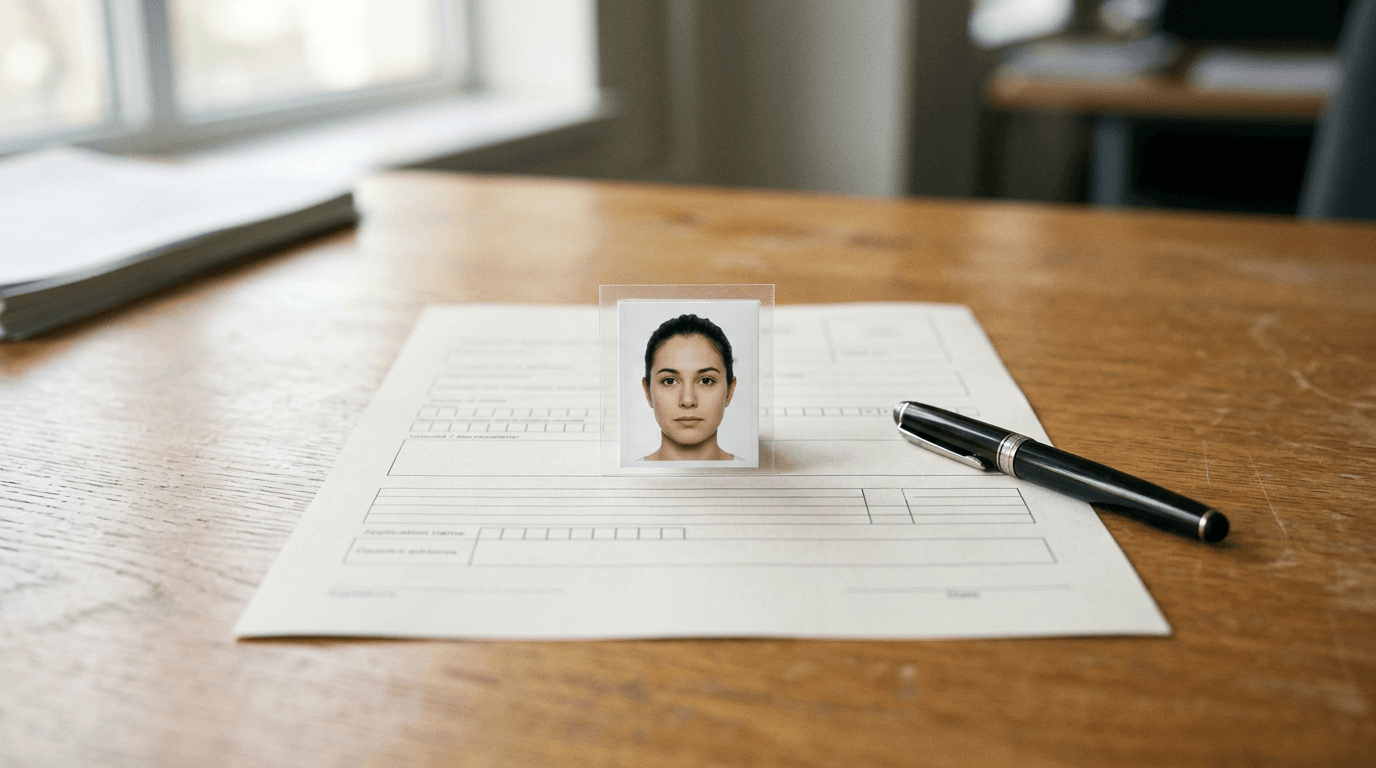
Discovering a travel document lacks the mandatory six months of validity at an international check-in kiosk is a highly specific, rapidly compounding problem. For adults, handling a reisepass abgelaufen requires navigating municipal bureaucracy on a tight timeline, but for parents traveling with infants or young children, the process introduces rigid biometric constraints and strict parental consent laws. German passports for minors cannot be extended; they must be completely replaced. Attempting to bypass the exact sequence of municipal appointments, police declarations, and biometric formatting usually results in rejected applications and missed travel windows. This guide details the precise steps to resolve an expired, lost, or completely new passport application in Germany, outlining the mechanical requirements of the Bürgeramt (citizens' office) and the structural rules governing biometric identity verification.
Quick Summary
A German passport renewal requires exact synchronization of biometric data collection, municipal appointment scheduling, and legal consent verification. Failing to meet the strict physical dimensions for infant photographs or missing secondary identification documents are the primary reasons applications are rejected at the desk.
- Lost documents mandate immediate police and municipal declarations before a replacement can be processed.
- Biometric photographs must strictly adhere to the 35x45 mm format, which is heavily scrutinized for infants.
- Both custodial parents must explicitly provide consent, either in person or via notarized municipal forms.
- Processing takes several weeks unless an Express-Reisepass is specifically requested and paid for.
Table of Contents
- Why a reisepass abgelaufen requires immediate action
- 1. Assess the Document Status
- 2. Prepare the Biometric Application Materials
- 3. Book the Municipal Appointment
- 4. Attend the Verification Interview
- 5. Execute the Document Collection
- Common Pitfalls & Troubleshooting
- FAQ
- Recommended Reads
Why a reisepass abgelaufen requires immediate action
Border control authorities calculate validity based on the entry date of the destination country, not the departure date from the European Union. A reisepass abgelaufen is not just a document that has passed its expiration date; in international travel logistics, a passport with fewer than six months of remaining validity is effectively expired for dozens of global jurisdictions. The German system relies on a centralized printing facility (the Bundesdruckerei), meaning municipal offices cannot print a permanent passport on-site. The standard processing delay forces applicants to address validity limits long before booking non-refundable international transit.
1. Assess the Document Status
Reporting a missing document triggers international invalidation
Before initiating a renewal, you must accurately categorize the status of the current document. If the passport is simply expired and in your physical possession, you will bring it to the appointment for permanent invalidation (usually achieved by the clerk punching holes through the biometric data page).
However, if you cannot locate the document, the process changes entirely. You must officially declare a reisepass verloren. This is not a casual notification; it is a legal declaration recorded directly into the Interpol database for lost and stolen travel documents. If you declare it lost and subsequently find it in a desk drawer the following week, you cannot simply travel on it. Crossing a border with a passport that was previously flagged as lost will trigger an immediate detention at passport control, as the document is permanently burned in the system.
When a document is lost, you must fill out a specific loss declaration form (Verlustanzeige) at the Bürgeramt, and in cases of suspected theft, file a preliminary report with the local police. The clerk cannot proceed with generating a replacement until the missing document's serial number is officially locked.
2. Prepare the Biometric Application Materials

Strict physical specifications dictate the approval process
The most frequent cause of failure at the Bürgeramt desk is a non-compliant photograph. The German government requires biometric photos to measure exactly 35x45 millimeters, featuring a light grey, uniform background with zero shadows cast by the subject. For adults, standing in a standard photo booth usually suffices. For infants and toddlers, standard booths are practically useless.
Infant photography requires the child to look directly at the lens with open eyes, no pacifiers, and no visible hands or parental arms supporting them. The municipal clerk applies a physical or digital biometric template over the submitted image; if the eyes do not fall within the mandated horizontal band, or the face fails to fill the required proportion of the vertical space, the photo is immediately rejected. Relying on specialized digital tools to automate this formatting prevents desk-side rejections. A dedicated Germany Baby Passport Photo Guide outlines the exact tolerances permitted for minors under the age of six, who are granted slight leniency regarding neutral expressions but no leniency regarding lighting, background, and head positioning.
Practical rule: Never print and cut a biometric photo yourself if your printer cannot output true 300 DPI on professional photographic paper; standard inkjet prints are automatically rejected due to visible dot matrices and lack of color depth.
If you are handling the photography digitally at home, using an EU Baby Passport Photo Maker ensures the background is stripped and the facial proportions are scaled to the exact mm requirement before you take the digital file to a local drugstore print kiosk. Always review the full directory of EU & International Baby Passport Photo Requirements & Guides if your child holds dual citizenship, as formatting rules change drastically across borders. For example, a file formatted for a German passport will fail if submitted for a US passport, as the United States Baby Passport Photo Guide specifies a completely different 2x2 inch square format.
3. Book the Municipal Appointment
Appointment scarcity demands strategic timing
German municipal offices operate strictly by appointment, and securing a slot requires navigating local booking portals that are notoriously congested. Waiting until the week of a flight to book a slot guarantees failure. When you apply for a reisepass neu, you must attend an in-person meeting at the Bürgeramt corresponding to your registered address (Meldebescheinigung).
If the standard booking portal shows no availability for weeks, applicants must utilize the early-morning release mechanism. Most municipal systems release a small batch of cancelled or unallocated appointments between 7:00 AM and 8:00 AM each weekday. If you face a travel emergency, calling the national public service number (115) can sometimes secure a hardship slot, provided you can prove imminent non-refundable travel.
During booking, you must decide between standard processing (which requires four to six weeks) and the Express-Reisepass. The express option commands a higher municipal fee but guarantees delivery to the municipal office within three to four business days. You cannot upgrade a standard application to an express application once the digital request is transmitted to the Bundesdruckerei.
4. Attend the Verification Interview
Custodial presence establishes legal consent
The appointment itself is a strict verification exercise. You must bring the current or expired passport, the compliant biometric photograph, your own valid identification, and the application fee. If you are applying for a minor, the child must be physically present at the desk regardless of their age. The clerk must visually verify that the infant matches the photograph provided.
German law heavily guards against international child abduction, meaning the consent of all custodial parents is strictly enforced. If both parents share custody, both must either attend the appointment in person or the attending parent must bring a signed, official consent form (Zustimmungserklärung) from the absent parent, alongside the original or a certified copy of the absent parent's passport or ID card.
For children over the age of six, the clerk will capture fingerprints via a digital scanner. For children aged ten and older, the child must physically sign the application form themselves. If any documentation is missing - particularly the consent form or the birth certificate confirming parentage - the clerk will terminate the appointment, forcing you to begin the booking process entirely from scratch.
5. Execute the Document Collection
Authorization forms are mandatory for third-party collection
Once the Bundesdruckerei manufactures the document, it is shipped directly to the municipal office where you applied. You do not receive the passport in the mail. Instead, you will receive a notification letter (often containing a PIN/PUK code if the document includes active electronic ID features) indicating the document is ready for collection.
Executing the reisepass ausholen is usually a walk-in procedure that does not require a formal appointment, though specific municipalities maintain different queuing systems for document pickup. You must bring the old, expired passport with you so the clerk can physically invalidate it before handing over the new one.
If you cannot attend the pickup yourself, you cannot simply send a spouse or relative to collect it. The proxy must carry a specific, signed power of attorney (Vollmacht) detailing exactly who is authorized to collect the specific document. The proxy must also present their own physical identification, the authorization form, and your old passport. If the proxy fails to bring the old passport for invalidation, the clerk will refuse to release the new document. Should any disputes arise regarding what is required for pickup, consulting the municipal Help Center or local government guidelines ahead of time prevents wasted trips.
Common Pitfalls & Troubleshooting
Navigating passport renewal exposes applicants to several rigid failure points that look identical from the outside but require entirely different fixes.
Symptom: The clerk rejects the biometric photograph immediately at the desk. Diagnosis: The image fails the physical template overlay. Usually, this means the head is too large, the background has a slight gradient, or an infant's mouth is open. Fix: You must generate a new photo. If using a digital service, rely on platforms that offer a 100% Refund Policy for compliance rejections to mitigate financial risk. Step away, generate a strictly formatted image targeting the 35x45 mm requirement, print it at a local drugstore kiosk, and return to the desk.
Symptom: The clerk refuses to process a minor's application despite the presence of one parent. Diagnosis: Missing legal consent from the secondary custodial parent. Fix: You cannot verbally promise consent. You must download the municipality's specific Zustimmungserklärung PDF, have the absent parent sign it, and present it alongside a physical copy of their ID. If you have sole custody, you must present the official court document (Sorgerechtsbeschluss) or a negative certificate (Negativbescheinigung) proving sole custody.
Symptom: The Express-Reisepass will not arrive before your flight. Diagnosis: The three-to-four-day express window has closed, and the Bundesdruckerei cannot physically deliver the document in time. Fix: You must apply for a temporary passport (vorläufiger Reisepass) at the desk. The clerk can print this green document on-site, but you must prove the emergency by showing your booked flight tickets. Note that a temporary passport is not universally accepted (for instance, it is invalid for the US ESTA program and requires a full B1/B2 visa instead).
FAQ
Can I travel back to Germany with an expired German passport? Technically, German citizens are permitted to enter Germany with a passport or ID card that has been expired for up to one year, based on specific European agreements. However, commercial airlines are not bound by this and will routinely deny boarding at the departure gate to anyone holding an expired document.
Do infants need their fingerprints taken? No. The German government only mandates fingerprint capture for children starting at age six. Minors under six only require the biometric photograph and parental verification.
What happens to my valid visas in the expired passport? When the clerk punches holes in the old passport to invalidate it, they will intentionally leave the pages containing valid visas intact. You must carry both the old, invalidated passport and the new passport when traveling to the country that issued the visa.
Can I apply for a German passport at the airport? No. The federal police at major German airports can issue a temporary emergency travel document (Reiseausweis als Passersatz) for certain destinations within the EU, but they cannot issue a standard or express biometric passport.