Passport Size Photo Dimensions: 2026 Biometric Compliance Guide
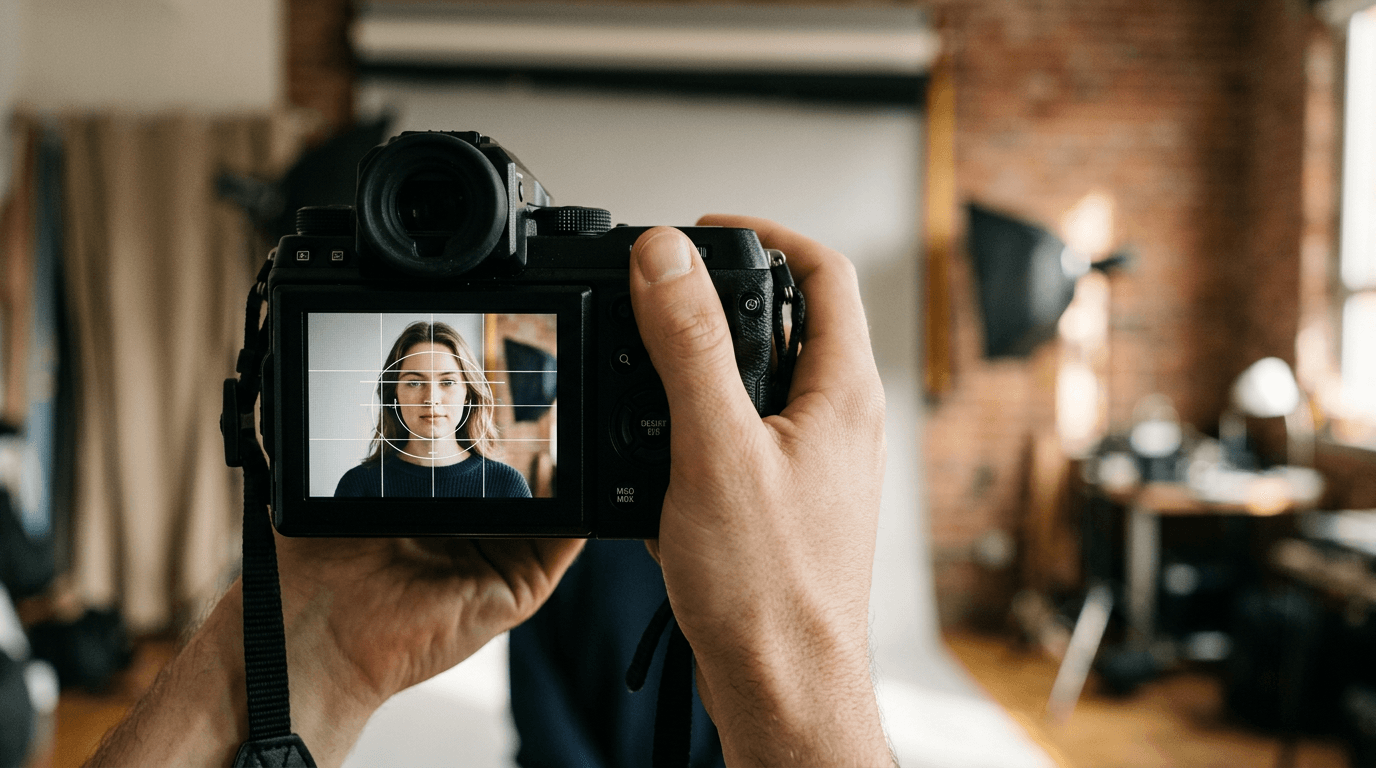
You are staring at a rejected application form because the subject's chin was two millimeters too low in the frame. The passport size photo dimensions are heavily regulated, and a minor deviation in cropping or background clearance is the leading cause of delays in government processing. When you submit an application, the first gatekeeper is rarely a human officer. Instead, a biometric scanning system evaluates the image against strict International Civil Aviation Organization (ICAO) standards, mapping the distance between the pupils, the tip of the nose, and the bottom of the chin before the application even reaches a desk.
Quick Summary
Navigating international passport size photo dimensions requires matching specific physical millimeter measurements with digital biometric grid requirements. Biometric photo size regulations govern not only the outer boundary of the image but the internal proportions of the facial features, ensuring automated border control systems can extract accurate facial data.
- Schengen area rules strictly mandate a 35x45mm frame with the face occupying the vast majority of the vertical space.
- United States applications require a square 2x2 inch (51x51mm) format.
- Digital submissions demand a minimum of 300 DPI and exact sRGB color profiles.
- Infant applications carry unique tolerance windows for posture and background.
Table of Contents
- Why physical measurements still dictate digital biometric validation
- How the 35x45mm standard dominates the Schengen area
- What breaks first when formatting international visa images
- When facial proportions matter more than total image size
- Why infant photography requires specialized tolerance windows
- FAQ
- Recommended Reads
Why physical measurements still dictate digital biometric validation
Even as application processes migrate to digital portals, the core rules of the passport image size remain anchored in physical space. Border control algorithms are trained to recognize human faces at specific focal lengths and within predictable frames of reference. When a system analyzes an uploaded JPEG, it virtually prints the image at 300 Dots Per Inch (DPI) to verify if the physical passport size photo dimensions align with ICAO guidelines.
If you upload an image that is 600x600 pixels, the system checks the metadata to ensure the physical print mapping equals 51x51mm or 2x2 inches. Biometric scanning relies on a grid. The system maps the center line of the face, calculates the exact distance between the pupils, and measures the vertical span from the crown of the head to the bottom of the chin. If the overall passport picture size is correct but the face is zoomed out, the pupil-to-pupil distance falls below the minimum required resolution for biometric hashing, resulting in an immediate rejection.
Digital compression is another frequent failure point. When compressing an image to meet a 240KB file size limit, heavy JPEG artifacts can blur the edges of the iris or the bridge of the nose. These artifacts act as physical noise to a biometric scanner. The system cannot distinguish between an actual facial asymmetry and a compression block, causing the facial map to fail the cross-reference check against the database.
Practical rule: Always crop the image to the exact target ratio before applying any digital compression to prevent the software from distorting the aspect ratio during a forced resize.
How the 35x45mm standard dominates the Schengen area
Across Europe, the passport format photo standard is almost universally standardized at 35 millimeters in width and 45 millimeters in height. This rectangular format is explicitly designed to capture the entire head and the top of the shoulders while leaving adequate background space to isolate the subject.

However, cutting an image to 35x45mm is only the preliminary step. The internal constraints are far more rigid. The face itself, measured from the base of the chin to the theoretical top of the head (excluding hair volume), must measure exactly between 32 and 36 millimeters. This ensures the face fills the vast majority of the frame's vertical height. If you are preparing a submission for German authorities, checking the Germany Baby Passport Photo Guide highlights how strictly this vertical proportion is enforced, particularly regarding the positioning of the eyes, which must sit in a specific horizontal band across the upper third of the image.
Background coloring also intersects with these dimensions. The background must be a light, uniform gray or white, depending on the specific country's interpretation of the EU regulations. This contrast allows the automated system to perfectly segment the subject's outline. Any shadows cast on the background behind the ears or neck merge with the subject's silhouette in the eyes of the scanner, artificially inflating the detected width of the head and failing the dimensional check.
What breaks first when formatting international visa images
The most common failure when applying for international documentation is assuming that your home country's standard applies globally. Attempting to submit a European 35x45mm image to a North American portal expecting a 2x2 inch square will either result in an automated portal error or a stretched image. When a rectangular image is forced into a square container without proper cropping, the subject's face is digitally widened. This creates a fraudulent biometric profile.
Consider the requirements for North America. The square passport size format dictates that the head must measure between 1 inch and 1 3/8 inches from the bottom of the chin to the top of the hair. If you take a European-sized photo and merely add white space to the sides to make it square, the head will be too large within the frame, violating the maximum vertical limit. Submitting documentation across different regulatory zones requires recapturing or professionally re-cropping the original unedited file to match the destination's rules. For instance, reviewing the United States Baby Passport Photo Guide reveals that the background must be stark white, with absolutely no digital manipulation to remove the background artificially, as the system detects edge-masking algorithms.
Another frequent break occurs with resolution scaling. Certain visa portals require a minimum of 600x600 pixels, while others demand 1200x1200 pixels for digital submissions. If you upscale a smaller image to meet this requirement, the interpolation softens the facial features. Biometric systems interpret this softness as a lack of focus, rejecting the passport photo requirements on quality grounds rather than dimensional ones.
When facial proportions matter more than total image size
The outer boundary of a photograph is the easiest parameter to fix; a simple guillotine trimmer or digital crop tool solves it. The critical failure mode lies in the internal facial mapping. Biometric software evaluates the 'Z-axis' or the depth and rotation of the face.
If the subject is tilted slightly forward, the distance from the nose to the chin appears foreshortened, while the forehead appears elongated. This pitch distortion alters the core facial hash. Similarly, a slight yaw (turning the head to the left or right) causes one ear to disappear and reduces the visible width of one eye. The passport image size standards mandate a perfectly frontal view because the algorithm relies on lateral symmetry.
| Specification | European Standard | North American Standard | Common Biometric Trigger |
|---|---|---|---|
| Overall Dimensions | 35x45 mm | 2x2 inches (51x51 mm) | Automatic portal rejection if aspect ratio fails |
| Head Height | 32-36 mm | 25-35 mm (1 - 1 3/8 inches) | Rejection if face is too close to the lens |
| Eye Position | 8-15 mm from top | 28-35 mm from bottom | Fails facial recognition grid alignment |
| Background | Light grey / white | Pure white | Edge detection failure due to shadows |
Lighting plays a structural role in this internal mapping. Harsh directional lighting creates a shadow on one side of the nose. To an automated scanner mapping the topography of the face, a deep shadow registers as physical depth, artificially altering the shape of the nose in the generated biometric model. The illumination must be entirely flat and diffuse, illuminating both cheeks and the bridge of the nose equally to ensure the 2D representation accurately translates into a 3D biometric profile.
Why infant photography requires specialized tolerance windows
Capturing an adult's face within these rigid constraints is straightforward. Applying the exact same biometric photo size rules to an infant introduces severe mechanical challenges. Infants, particularly newborns, lack the cervical strength to support their heads, making the perfectly vertical, frontal gaze almost impossible to achieve without assistance.
Regulatory bodies recognize this and apply specific tolerance windows for applicants under one year of age. The core requirement remains: the face must be fully visible, both eyes must be open, and no pacifiers or hands can obscure the facial features. However, the requirement for a perfectly neutral expression is slightly relaxed. A partially open mouth on a three-month-old will not trigger an automatic rejection, whereas it would for an adult.
The practical challenge is the background. Because the child must usually lie on their back, parents often place them on a white sheet. Wrinkles in the sheet create shadows that violate the uniform background rule. Furthermore, if a parent's hand is visible supporting the child's head, the image is voided. You can see the specific mechanical workarounds for this in the United Kingdom Baby Passport Photo Guide, which details how to position a car seat with a white cloth to achieve the correct angle without introducing supporting limbs into the frame.
Practical rule: When photographing an infant from above, ensure the camera lens remains exactly parallel to the floor to prevent introducing a vertical tilt that distorts the child's facial proportions.
Even with relaxed expression rules, the physical dimensions must remain strictly compliant. The 35x45mm or 2x2 inch boundaries do not scale down for smaller faces. The infant's head must still occupy the mandated percentage of the frame, requiring the photographer to carefully manage the focal distance. Getting too close causes barrel distortion from the camera lens, bulging the center of the face, while standing too far away reduces the pixel density of the facial features below the biometric threshold.
FAQ
What is the standard passport photo size globally?
There is no single global standard. The Schengen area and many other countries use 35x45mm, while the United States and India use 2x2 inches (51x51mm).
Can I crop a larger image to meet passport size photo dimensions?
Yes, provided the original image is high enough resolution so that cropping does not degrade the DPI below 300, and the facial proportions remain within the legal limits.
How much of the photo should the face cover?
In European standards, the face must cover 70-80% of the vertical space (32-36mm). In US standards, the head must measure between 1 and 1 3/8 inches.
Why do digital portals reject perfectly sized images?
The image file may have the correct aspect ratio but fail due to incorrect pixel dimensions, low resolution (DPI), improper sRGB color formatting, or excessive JPEG compression artifacts.
Do babies need to meet the exact same dimensional rules?
Yes, the overall frame and the proportion of the head within the frame must adhere to the standard. However, authorities grant minor tolerances for infant posture, expression, and eye direction.