Understanding German Travel Documents: Managing Your Reisepass Passnummer and Biometric Records
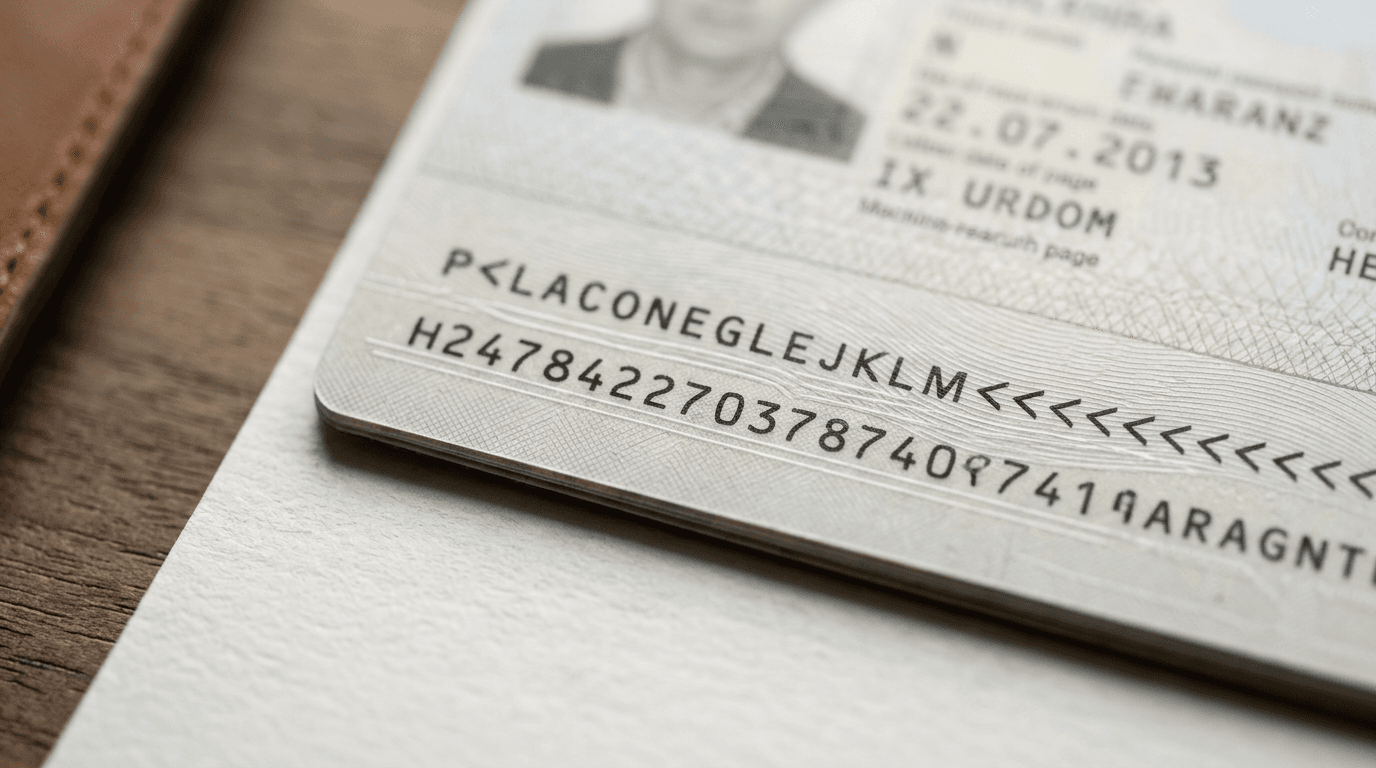
You are staring at the machine-readable zone of a German travel document, trying to determine exactly which alphanumerics actually constitute the reisepass passnummer. Border control systems, airline ticketing platforms, and civil registry databases demand absolute precision, yet the architecture of a modern biometric passport often obscures the exact sequence needed. Failing to input the correct document serial number or misinterpreting the biometric constraints on the chip introduces immediate friction, ranging from blocked flight check-ins to invalid visa applications.
Quick Summary
Managing identification data on German travel documents requires parsing the physical machine-readable zone and maintaining the integrity of the integrated biometric chip. The nine-digit document number specifically identifies the booklet during its validity period, not the citizen.
- The primary document identifier is an alphanumeric sequence that excludes vowels to prevent unauthorized word formation.
- Data stored on the biometric chip must match the printed civil registry exactly, including specific name changes.
- Identification cards and passports serve distinct legal functions despite sharing physical security protocols.
- Biometric images must adhere strictly to the International Civil Aviation Organization (ICAO) templates to authorize electronic reads.
Table of Contents
- Navigating the Document Architecture
- Decoding the Reisepass Ausweisnummer
- Biometric Data Storage and Verification
- Comparing the Personalausweis Reisepass Formats
- Managing a Reisepass Namensänderung
- Preventing Chip Verification Failures
- FAQ
- Recommended Reads
Navigating the Document Architecture
The modern German passport (ePass) relies on a dual-verification system: the physical polycarbonate data page and the embedded radio-frequency identification (RFID) chip. Both elements maintain synchronized records of your identity, but they fail in entirely distinct ways. The physical page is vulnerable to optical character recognition (OCR) errors at automated gates, while the chip relies on cryptographic handshakes that fail if the initial optical read misidentifies your core identifiers.
Automated border control (eGates) uses Basic Access Control (BAC). The gate scans the printed Machine Readable Zone (MRZ) to derive a cryptographic key. It uses this key to unlock and read the radio chip. If you enter incorrect data into an airline application, or if the MRZ suffers physical damage, the gate cannot generate the matching key to read the chip. The system defaults to a manual verification queue.
Decoding the Reisepass Ausweisnummer
Locating the correct reisepass ausweisnummer means distinguishing the nine-character document serial number from the longer strings generated in the MRZ. The German system utilizes an alphanumeric format consisting exclusively of the numbers 0-9 and the letters C, F, G, H, J, K, L, M, N, P, R, T, V, W, X, Y, Z.
This deliberate omission of vowels (and specific consonants like B, D, Q, S) prevents the accidental generation of recognizable words or offensive terms in the serial number. Crucially, it eliminates optical confusion between the letter "O" and the number "0". In a German passport number, every circular character is strictly the numeral zero.
Practical rule: Never enter the letter "O" when inputting a German document serial number into a visa or flight manifest system. The character is always the number zero.
The Machine Readable Zone Constraints
The passport number appears printed in the upper right corner of the data page and is repeated on the second line of the MRZ at the bottom, occupying characters 1 through 9. This number identifies the specific physical booklet. It is not a lifelong citizen identification number. When the document expires and you order a replacement, the entire serial number changes. This mechanical detail breaks continuity in long-term visa systems, requiring travelers to carry both the active passport and the canceled document containing a valid but older visa.
Biometric Data Storage and Verification
The RFID chip embedded in the cover of the document acts as a secure cryptographic vault, governed by the International Civil Aviation Organization (ICAO) Doc 9303 standard. Germany utilizes Active Authentication and Supplemental Access Control (SAC) to prevent cloning and eavesdropping.
The chip stores three distinct files (Logical Data Structures):
- LDS1: The biographical data mirrored exactly from the printed page.
- LDS2: The digitized facial image.
- LDS3: Two specialized fingerprint minutiae templates.
Accessing the fingerprints requires specific terminal certificates known as Extended Access Control (EAC). Only authorized governmental border control terminals possess the decryption keys to read the fingerprints. Commercial airline applications and mobile passport reading tools can only access the biographical data and the facial image.
When a biometric verification fails at a terminal, the failure usually stems from the facial image comparison algorithm rather than the chip's data integrity. If a traveler's physical appearance deviates significantly from the stored template due to extreme lighting changes during the capture, the mathematical distance between the live capture and the chip template exceeds the permitted threshold. If you are preparing a document application for an infant, ensuring the visual template aligns perfectly with strict municipal requirements is critical. You can review the mechanical specifications for infant photography in the Germany baby passport photo guide to understand how the algorithms map facial landmarks.
Comparing the Personalausweis Reisepass Formats
The intersection of the personalausweis reisepass systems often confuses frequent travelers regarding legal carriage requirements and digital authentication features.
The Personalausweis (National Identity Card) is a legal requirement for domestic identification for citizens over 16. It operates on a credit-card-sized ID-1 format and features the eID function (Online-Ausweisfunktion), allowing citizens to securely authenticate themselves to digital government services and commercial banks via NFC on a smartphone.
The Reisepass operates on the ID-3 booklet format and prioritizes international border interoperability over domestic digital services. While both carry biometric chips containing facial images and fingerprints, the passport lacks the specific eID middleware necessary to log into a German digital tax portal. Conversely, attempting to use the national ID card outside the European Union and Schengen Area routinely triggers border rejections, as third-country border systems lack the bilateral agreements required to process the ID-1 format as a primary travel document.
Managing a Reisepass Namensänderung
Civil registry modifications invalidate the cryptographic trust encoded into the travel document. If you undergo a life event that alters your legal surname, such as marriage or a formal civil registry update, your existing travel document becomes legally inaccurate. Executing a reisepass namensänderung requires obtaining an entirely new physical booklet.
The embedded chip is cryptographically signed by the German federal printing office (Bundesdruckerei) at the time of manufacture. It operates as Read-Only memory. It is mechanically impossible for a municipal clerk (Bürgeramt) to update the name stored on the existing chip or the printed polycarbonate page.
If you book an international flight using a newly acquired married name, but your passport still reflects your maiden name, the airline's Advance Passenger Information System (APIS) will flag a mismatch. The physical boarding pass must exactly mirror the machine-readable zone of the passport. For citizens living abroad or navigating complex civil transitions, managing the timing of these applications requires coordination with the local consulate.
Preventing Chip Verification Failures
The durability of the electronic document dictates its utility. The embedded copper antenna that circles the perimeter of the document cover connects to the microscopic RFID chip. Bending the booklet severely, exposing it to extreme thermal shock (leaving it in a freezing vehicle), or placing it near strong electromagnetic fields can fracture the antenna bond.

Diagnosing a Dead Chip
A physical fracture in the antenna renders the chip permanently unreadable. This defect is invisible to the naked eye.
If an automated eGate repeatedly instructs you to seek manual assistance despite scanning the printed page correctly, you should test the chip using an NFC-enabled smartphone and a standard biometric reading application. If the smartphone cannot detect the NFC tag when placed flush against the back cover, the hardware has likely failed. A dead chip does not legally invalidate the document for manual inspection, but it entirely disables your ability to use automated border control lanes globally. For travelers applying from abroad, such as those relying on the United Kingdom baby passport photo guide to manage dual citizenship documentation requirements, preserving the physical integrity of the primary document is essential for maintaining efficient travel workflows.
FAQ
Does a German document number include the letter O?
No. The German numbering system specifically excludes vowels and certain consonants to prevent the formation of words. Any circular character in the document serial number is strictly the number zero.
Can border guards update the address on the biometric chip?
The address printed on a German passport can be manually updated via an official sticker by a consulate or municipal office, but the data on the biometric chip is read-only and cannot be altered after the document is manufactured.
Do both the passport and the national ID card carry the same serial number?
No. The Personalausweis and the Reisepass are independent documents with distinct serial numbers, issuance dates, and physical architectures.
What invalidates the integrated biometric chip?
Physical bending that breaks the embedded antenna, extreme thermal stress, and strong electromagnetic fields can permanently damage the RFID communication link, necessitating manual border processing.