Understanding the 2026 Passport Index: Global Mobility and Visa Access
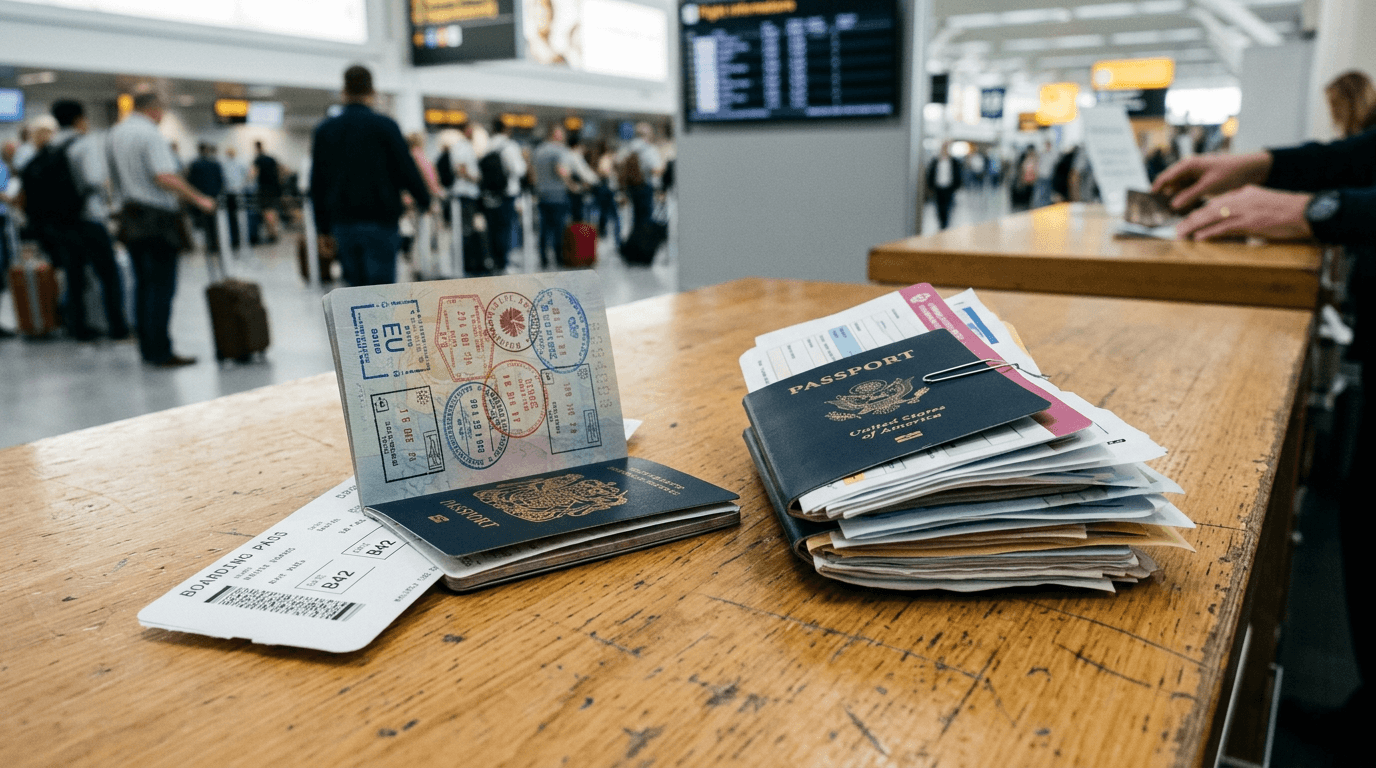
Global mobility is not distributed equally. A traveler holding a Spanish passport can book a flight to Tokyo on a Tuesday and board it on Wednesday, while someone born in a different jurisdiction might spend three months compiling financial records for the same destination. This is what the passport index measures: the friction between a traveler's citizenship and their destination's border. It is a quantification of geopolitical trust, economic parity, and diplomatic reciprocity.
This article compares different tiers of passport strength, examining how a nation's document impacts the movement of families, expatriates, and frequent travelers. It evaluates passports based on their visa-free access and the tangible impact on international mobility.
Quick Summary
The passport index ranks global travel documents by the number of countries their holders can enter without obtaining a visa in advance. It reflects a nation's diplomatic standing and directly dictates a traveler's freedom of movement.
- Top-tier passports (like a Spanish passport) offer near-universal access.
- Mid-tier passports often require e-visas or visas on arrival for major economic zones.
- Lower-tier documents demand extensive, pre-approved embassy visas.
- Changes in an index ranking signal shifts in international relations or border security policies.
Table of Contents
- 1. Top-Tier European Passports
- 2. High-Mobility Non-EU Passports
- 3. Mid-Tier Emerging Passports
- 4. Specialized Investment Passports
- 5. Lower-Tier Restricted Passports
- 6. Dual Citizenship Documents
- 7. Official and Diplomatic Passports
- Matching Your Passport to Your Travel Reality
- FAQ
- Recommended Reads
1. Top-Tier European Passports
Top-tier European passports, such as a Spanish passport, a polnische reisepass, or a kroatischer reisepass, grant their holders visa-free or visa-on-arrival access to over 190 destinations. These documents are designed for citizens of politically stable, economically strong nations within the European Union. They serve expatriate families and frequent travelers who need immediate, unquestioned entry into major global hubs across the Americas, Asia, and Oceania.
These passports work through established reciprocal agreements. Because EU member states maintain rigorous internal security and stable economies, partner nations assume the holders present low immigration and security risks. The mechanism is a shared database and diplomatic treaties that waive the requirement for pre-departure vetting.
The advantage of frictionless travel
The true strength of a top-tier European passport is not just the number of countries accessed, but the absence of administrative friction. When traveling with infants, families using an internationaler reisepass from these nations avoid the months of waiting for consular appointments. However, these documents are bound by EU regulations. A holder still needs proper documentation for specific long-term stays, and the passport must meet stringent biometric standards, requiring perfectly formatted photos for both adults and children.
2. High-Mobility Non-EU Passports
Passports from nations like Singapore, Japan, and the United States sit at the top of the mobility spectrum alongside European documents. They are designed for citizens of global economic powerhouses and cater to business travelers and families who frequently cross major international borders. These documents often boast visa-free access to over 185 jurisdictions.
These passports function on economic leverage and sustained diplomatic neutrality or alliance. Their high ranking is sustained by low visa refusal rates and high domestic GDP. Border control agencies trust the issuing authorities' biometric security and the low likelihood of the traveler overstaying.
Accessing specific economic regions
While these documents offer vast access, they often lack the seamless settlement rights found within the EU Schengen zone. A non-EU high-mobility passport gets you into the room quickly, but it does not automatically grant you the right to stay and work indefinitely. For families relocating rather than touring, the initial visa-free entry must still be followed by complex residency applications, which demand strict adherence to local biometric requirements.
Practical rule: Do not confuse visa-free entry with residency rights; high mobility only guarantees your ability to cross the border as a visitor.
3. Mid-Tier Emerging Passports
Mid-tier passports typically belong to rapidly developing nations across South America, parts of Eastern Europe outside the EU, and certain Asian countries. They are held by a growing middle class that travels increasingly for tourism and business. These documents grant visa-free or visa-on-arrival access to roughly 80 to 140 countries.
These documents operate in a transitional diplomatic space. They rely heavily on regional agreements (like Mercosur) and expanding bilateral treaties. Often, these nations are negotiating better access by improving their domestic passport security features and demonstrating stronger economic stability to partner countries.
Navigating e-visas and arrival processes
The reality of a mid-tier passport is the frequent need for Electronic Travel Authorizations (e-visas) or visas on arrival. This introduces a layer of uncertainty that top-tier passport holders do not face. A family traveling with a mid-tier document must often upload digital passport photos and await approval before boarding. If the submitted infant photo fails the destination's automated checks, the e-visa is denied, halting the journey before it begins.
4. Specialized Investment Passports
Investment passports are acquired through Citizenship by Investment (CBI) programs, commonly offered by Caribbean and some European nations. They are designed specifically for high-net-worth individuals from restricted jurisdictions who need to bypass the travel limitations of their birth passports. They provide a secondary route to global mobility.

These programs work by trading capital for citizenship. The issuing country gains foreign direct investment, and the applicant gains a document with better visa-free access (often including the UK and Schengen area). The mechanism is purely transactional, governed by the issuing state's specific investment laws rather than the applicant's historical ties to the country.
Buying access versus organic standing
While these passports solve immediate mobility issues, they are increasingly scrutinized by major economic zones. The EU has periodically suspended visa-free access for certain CBI countries over security concerns regarding who is purchasing the passports. This makes them a volatile long-term solution. They suit an individual needing immediate business mobility but pose a risk if international relations tighten and the purchased access is abruptly revoked.
5. Lower-Tier Restricted Passports
Lower-tier passports belong to nations experiencing political instability, severe economic challenges, or active conflict. Holders of these documents can access fewer than 50 countries without a prior visa. They are held by citizens who face significant barriers when attempting to travel for education, business, or family reunification.
These documents face near-universal friction because partner nations assess the holders as high-risk for asylum claims or overstaying. The mechanism here is strict pre-travel vetting. Border agencies demand extensive proof of intent to return, including bank statements, employment letters, and in-person consular interviews.
The heavy burden of administrative proof
Traveling with a restricted passport requires immaculate preparation. Every visa application is scrutinized, and any error in the submitted documentation - especially non-compliant biometric photos of family members - results in immediate rejection. This passport does not suit spontaneous travel; it demands that a family treat every international trip as a complex administrative project requiring weeks of lead time.
6. Dual Citizenship Documents
Dual citizenship involves holding two valid passports from different nations, such as combining a US passport with a kroatischer reisepass. It is utilized by expatriate families, children born abroad, and individuals who have naturalized in a second country. It aims to maximize global mobility by covering the gaps left by a single document.
This works by allowing the traveler to present the most advantageous document at any given border. If Nation A requires a visa for Nation B's passport but not for Nation C's, the dual citizen uses Nation C's passport for that trip. The mechanism is the legal recognition of multiple allegiances by the issuing states.
Combining regional strengths for global reach
While dual citizenship offers unparalleled flexibility, it introduces complex logistical burdens. You must enter and exit a country using the same passport, and some nations require you to enter using their specific document if you are a citizen. Furthermore, maintaining dual passports means tracking multiple expiration dates and ensuring that biometric updates, particularly for growing infants, are kept current across two separate bureaucratic systems.
7. Official and Diplomatic Passports
Official and diplomatic passports are issued to government employees, diplomats, and their immediate dependents. They are not for general public use. They facilitate international travel specifically for state business, ensuring that government representatives can cross borders without the delays of standard visa processing.
These documents function under the Vienna Convention on Diplomatic Relations. They signal to foreign border agents that the holder is acting on behalf of a sovereign state. This often waives standard visa requirements and exempts the holder from certain customs searches, based entirely on diplomatic protocol rather than the individual's personal status.
State business limits private movement
Despite their prestige, diplomatic passports are highly restrictive. They cannot be used for personal vacations or private business ventures. A diplomat's family attempting to use an official passport for a holiday will face immediate issues at the border. Therefore, holders must also maintain standard civilian passports for private travel, doubling the need for compliant documentation and accurate identity photos.
Practical rule: Never attempt to use a specialized or official document for a purpose outside its exact legal definition; border agencies will reject it.
Matching Your Passport to Your Travel Reality
Your position on the passport index dictates your travel strategy. If you hold a top-tier document like a Spanish passport, your primary concern is maintaining validity and ensuring any accompanying infants have correctly formatted biometric photos. If you travel on a mid-tier document, you must build e-visa processing times into your itinerary. For those holding lower-tier passports, mobility requires extensive administrative preparation, where every piece of documentation must be flawless to survive consular scrutiny. Understanding your passport's exact limitations allows you to plan effectively and avoid being turned away at the border.
FAQ
What determines a country's rank on the passport index?
A country's rank is determined by the number of destinations its citizens can access without obtaining a prior visa, relying on diplomatic agreements and economic standing.
Can a passport's strength change over time?
Yes. Passports frequently move up or down the index as nations negotiate new bilateral treaties or face international sanctions.
Does a strong passport guarantee entry?
No. Even with visa-free access, border agents retain the authority to deny entry if they suspect the traveler intends to overstay or violate the terms of their visit.
How do e-visas affect passport rankings?
Destinations requiring e-visas are often counted favorably in mobility scores compared to those requiring full consular visas, as the electronic process is significantly faster.
Why do biometric photos matter for visa-free travel?
Even when a visa is not required, border agencies use biometric data (captured via compliant passport photos) to verify identity against security databases.